The Indoor Tomato Growing Mix I Keep Coming Back To: Mother Earth 70/30 Coco Perlite
After years of growing tomatoes indoors, one growing medium keeps winning: Mother Earth 70/30 Coco Perlite. Here's exactly why it works so well — and how to use it from day one.
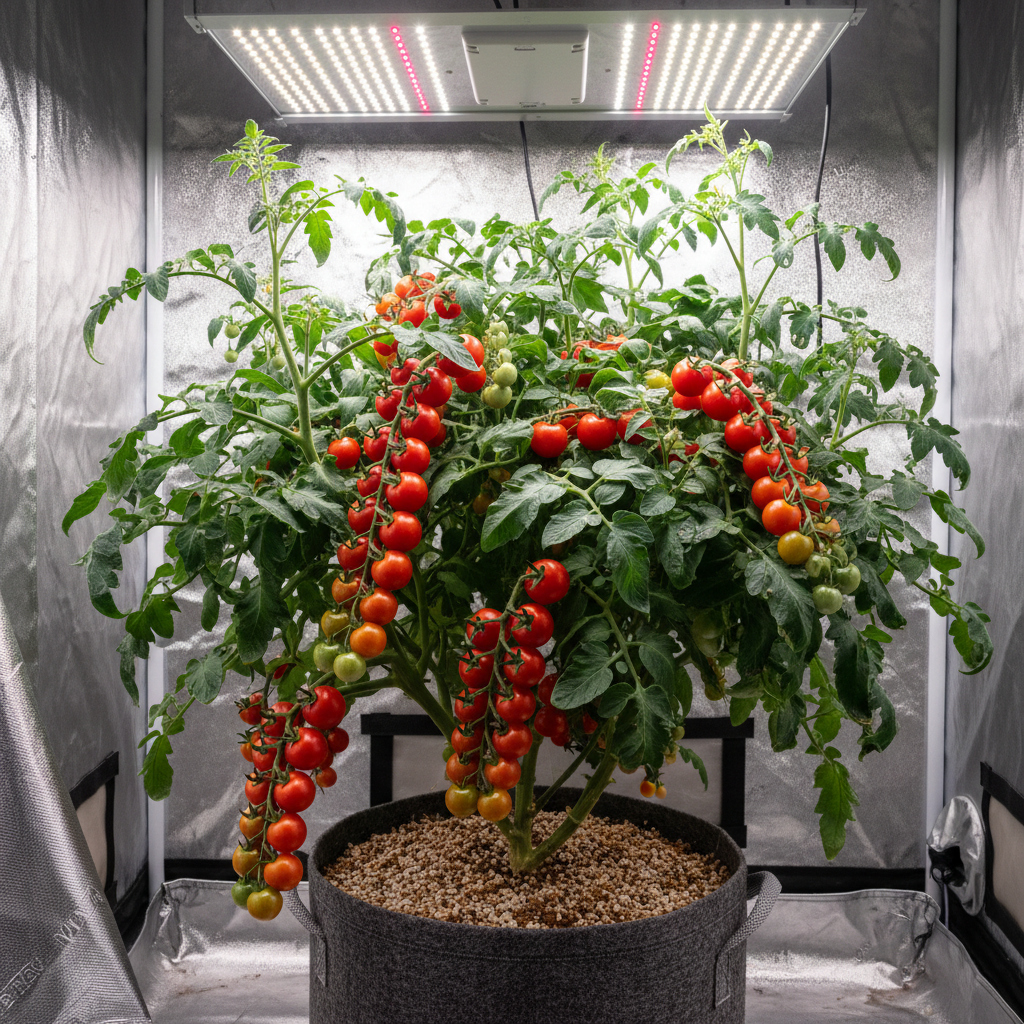
The Indoor Tomato Growing Mix I Keep Coming Back To
I've grown tomatoes in potting soil. I've grown them in peat moss. I've tried vermiculite blends, specialty mixes from garden centres, and more than a few bags of whatever was on sale. After all of that, I keep coming back to the same growing medium every single time: coco perlite.
Specifically, Mother Earth 70/30 Coco Perlite Mix.
This isn't a sponsored post. I'm not going to tell you it's magic. What I will tell you is that after years of growing tomatoes indoors — in grow tents, on windowsills, under LED panels, and in self-watering containers — this medium has proven itself over and over. If you're serious about indoor tomatoes, this guide covers everything you need to know about using it well.
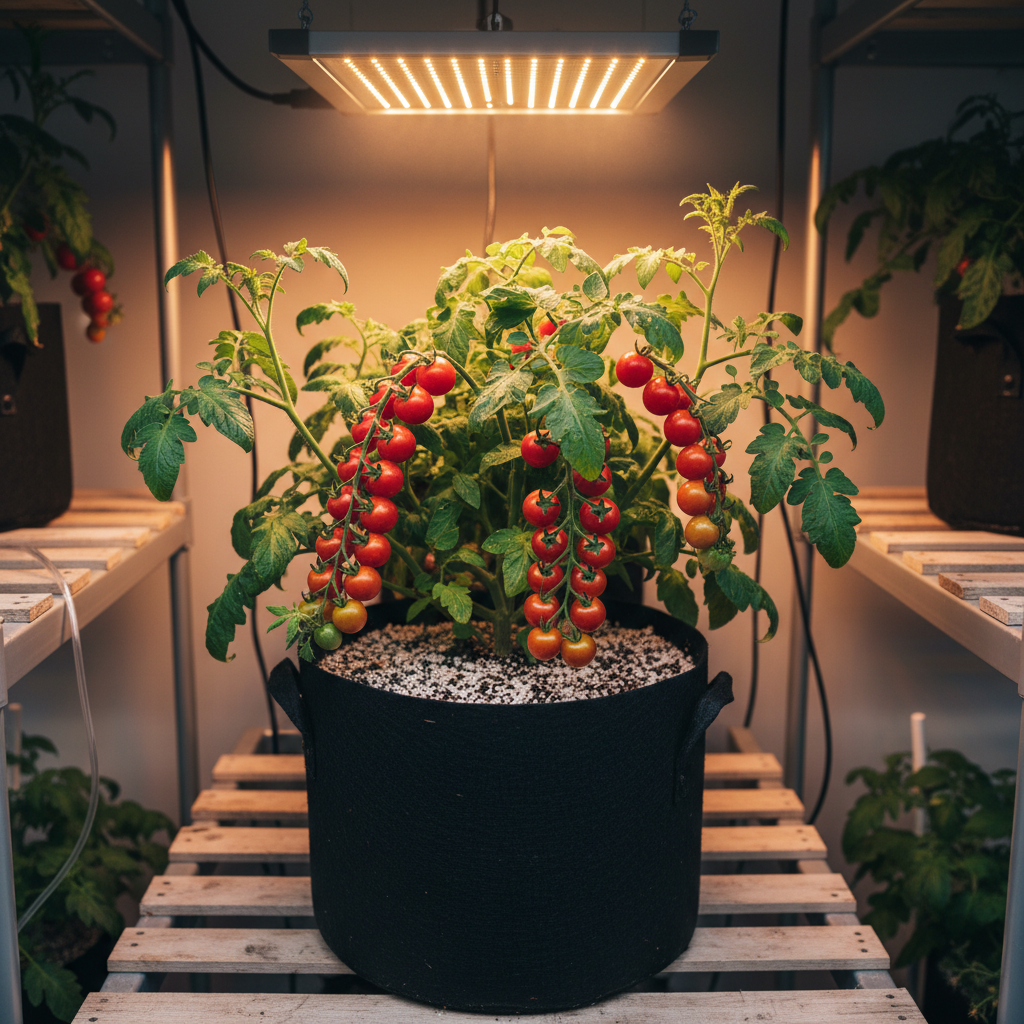
Indoor tomato plant growing in a fabric pot with coco perlite under LED grow lights
Why Your Growing Medium Actually Matters
Most beginners obsess over lights, nutrients, and variety selection. Those things matter. But the growing medium is the foundation everything else sits on — and a bad foundation undermines every other good decision you make.
The medium you grow in determines:
- How much oxygen reaches your roots (critical for tomatoes)
- How quickly water drains (tomatoes hate wet feet)
- How precisely you can control nutrition
- Whether root rot becomes a recurring nightmare or a non-issue
- How fast your plants grow and fruit
Growing tomatoes indoors is already a challenge. You're managing light cycles, pollination, humidity, and temperature — all without the natural buffering of an outdoor garden. The last thing you want is a growing medium that creates problems instead of solving them.
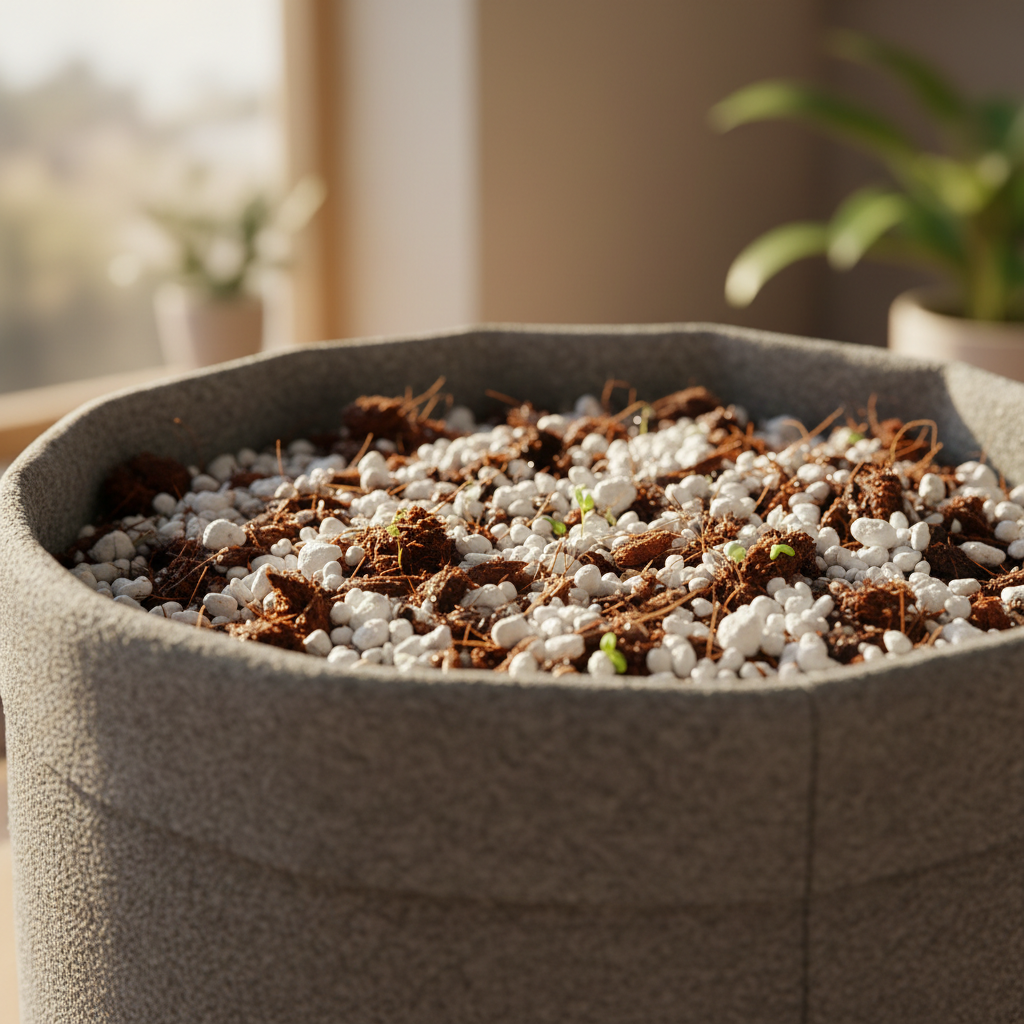
Close-up of white perlite mixed into coco coir growing medium
What Is Mother Earth 70/30 Coco Perlite?
Coco Coir — The Base
Coco coir is made from the fibrous husk of coconut shells — the material between the outer shell and the inner nut. What was once a waste product from the coconut industry has become one of the most popular growing mediums in professional horticulture.
Coco coir is:
- Structurally stable — it doesn't compact over time like peat moss
- pH-neutral (approximately 5.8–6.8, ideal for tomatoes)
- Naturally antifungal — coco fibers resist the mold and fungal growth that plagues soil grows
- Excellent at retaining moisture while still allowing air flow
- Sustainable — it's a renewable byproduct, not a mined resource like peat
On its own, coco coir can hold too much water for tomatoes. That's where perlite comes in.
Perlite — The Drainage Hero
Perlite is volcanic glass that's been superheated until it pops into lightweight white particles. Those particles create air pockets throughout your growing medium that:
- Prevent compaction
- Allow roots to penetrate easily
- Create drainage channels so excess water moves through fast
- Aerate the root zone with oxygen
Perlite is chemically inert, pH-neutral, and never degrades. A bag of perlite lasts essentially forever.
The 70/30 Ratio — Why It's the Sweet Spot
The 70% coco, 30% perlite ratio is the result of years of refinement by commercial growers. It delivers:
- Enough coco to hold moisture between waterings (critical in warm, dry grow tents)
- Enough perlite to prevent waterlogging and keep roots well-oxygenated
- A texture that's easy to work with — not too loose, not too dense
You can mix your own from separate bags of coco and perlite. But Mother Earth's pre-blended 70/30 mix saves time and ensures consistency. When you're setting up multiple fabric pots or a grow tent run, consistency matters.
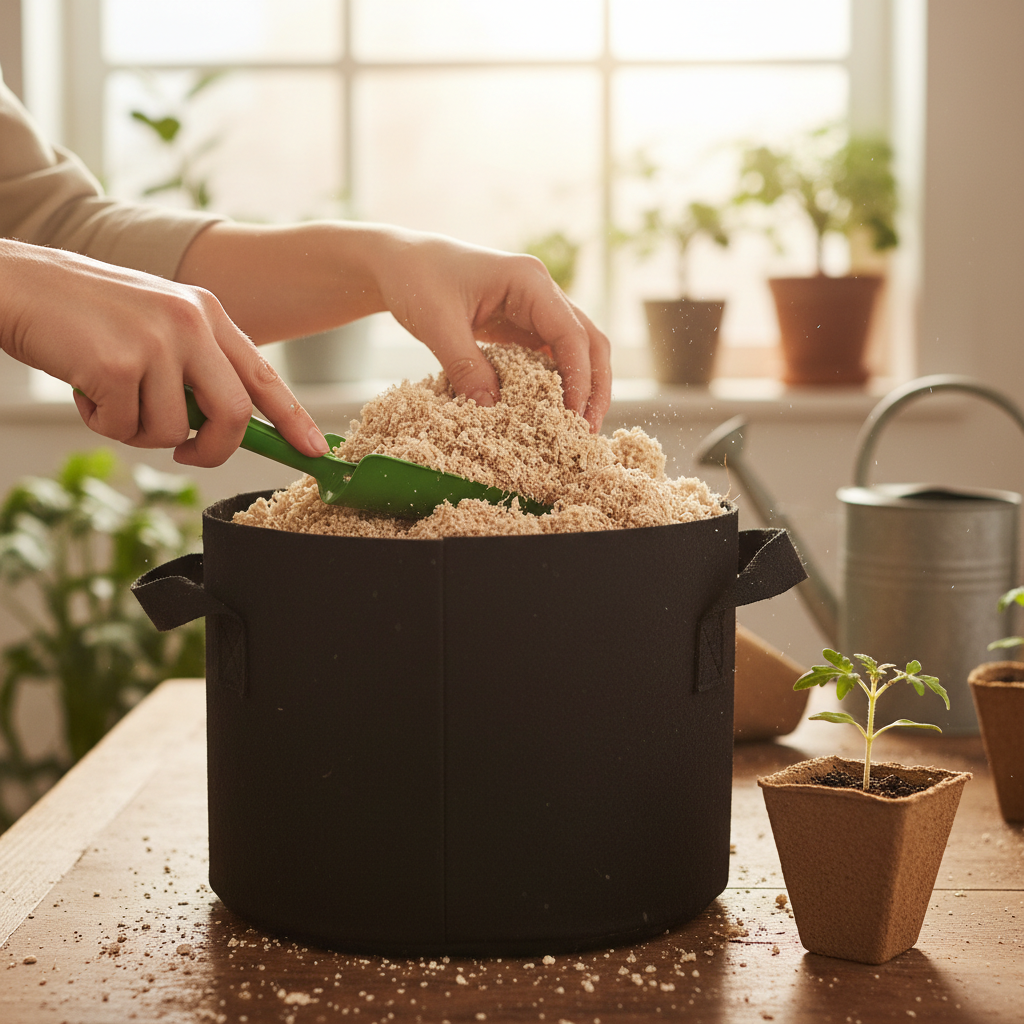
Hands mixing coco coir growing medium into a fabric pot
Why Coco Perlite Works So Well for Indoor Tomatoes
The Secret to Faster Indoor Tomato Growth
Tomato roots need oxygen almost as much as they need water and nutrients. In dense potting soil, roots can only grow where there are air pockets — and those compress over time as the soil settles and gets watered.
In coco perlite, the air pockets are structural and permanent. Every time you water, the perlite channels drain excess moisture quickly and pull fresh oxygenated air down behind it. Roots colonize the entire pot rapidly because there's no resistance.
I've watched tomato plants in coco perlite outgrow identical plants in potting soil by 30–40% in the first six weeks. The difference is visible, measurable, and consistent.
Why Soil Was Holding My Tomatoes Back
Potting soil has two problems for indoor tomatoes specifically:
- Overwatering is easy and devastating — soil holds water longer than roots need, especially in pots without outdoor sun to dry things out quickly. Root rot follows.
- Nutrient control is imprecise — you never quite know what's in the soil, what's been depleted, or what's locking out what.
With coco perlite, you start with a blank slate. You deliver exactly what the plant needs, in exactly the right concentration, at every feeding. When something goes wrong, you know it's either pH or nutrients — not mysterious soil chemistry.
Perfect for Grow Tents
Indoor grow tents create a warm, slightly humid environment. That environment is ideal for tomatoes — but it's also ideal for root rot in dense, poorly draining mediums.
Coco perlite drains so quickly that even in a warm tent with daily watering, the root zone stays aerated. Combined with fabric pots that air-prune roots from the sides, it's a setup that naturally prevents the problems that plague grow tent growers using standard soil.
Excellent for Self-Watering Systems
Self-watering containers use a wick or bottom-fill reservoir to keep the growing medium consistently moist. Coco perlite wicks moisture efficiently from a reservoir while still providing enough air space to prevent waterlogging. It's one of the best mediums for self-watering tomato setups.
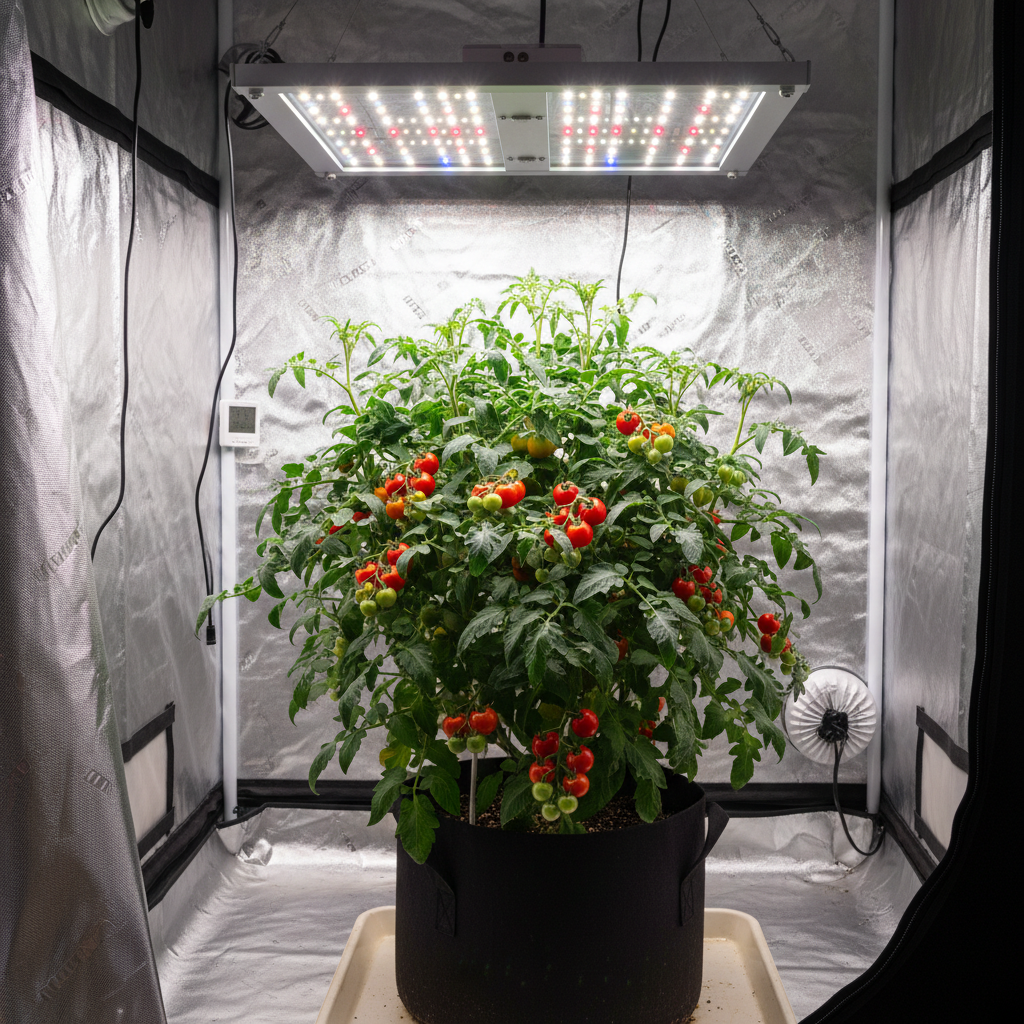
Thriving indoor tomato plant with cherry tomatoes under LED grow light
My Favorite Ways to Use It
1. Fabric Pots in a Grow Tent
This is my go-to setup. Five-gallon fabric pots filled with Mother Earth 70/30, under a Mars Hydro LED, fed with MaxiGro during veg and MaxiBloom during fruiting. The fabric pots air-prune the roots, the coco perlite drains fast, and the whole system is clean and predictable.
For a 2x4 tent, I use two or three 5-gallon fabric pots. Cherry tomatoes fill out beautifully in this setup. Mother Earth 70/30 is my default fill for every one of them.
2. Self-Watering Containers
For growers who want lower-maintenance setups, self-watering containers work well with coco perlite. The mix wicks moisture from the reservoir efficiently, and the perlite keeps the upper zone from staying too wet. This reduces watering frequency significantly while keeping roots consistently hydrated.
3. Drip Irrigation
If you're running multiple plants, a simple drip system paired with coco perlite is extremely efficient. Set drip emitters to run 3–4 short cycles per day. The fast drainage of coco perlite means you won't waterlog plants even with frequent cycles.
4. Top-Fed Hand Watering
The simplest approach — water from the top until you see runoff from the drainage holes, then wait until the pot lightens (lift it to judge). In a warm grow tent, this typically means watering every 1–2 days for established plants.
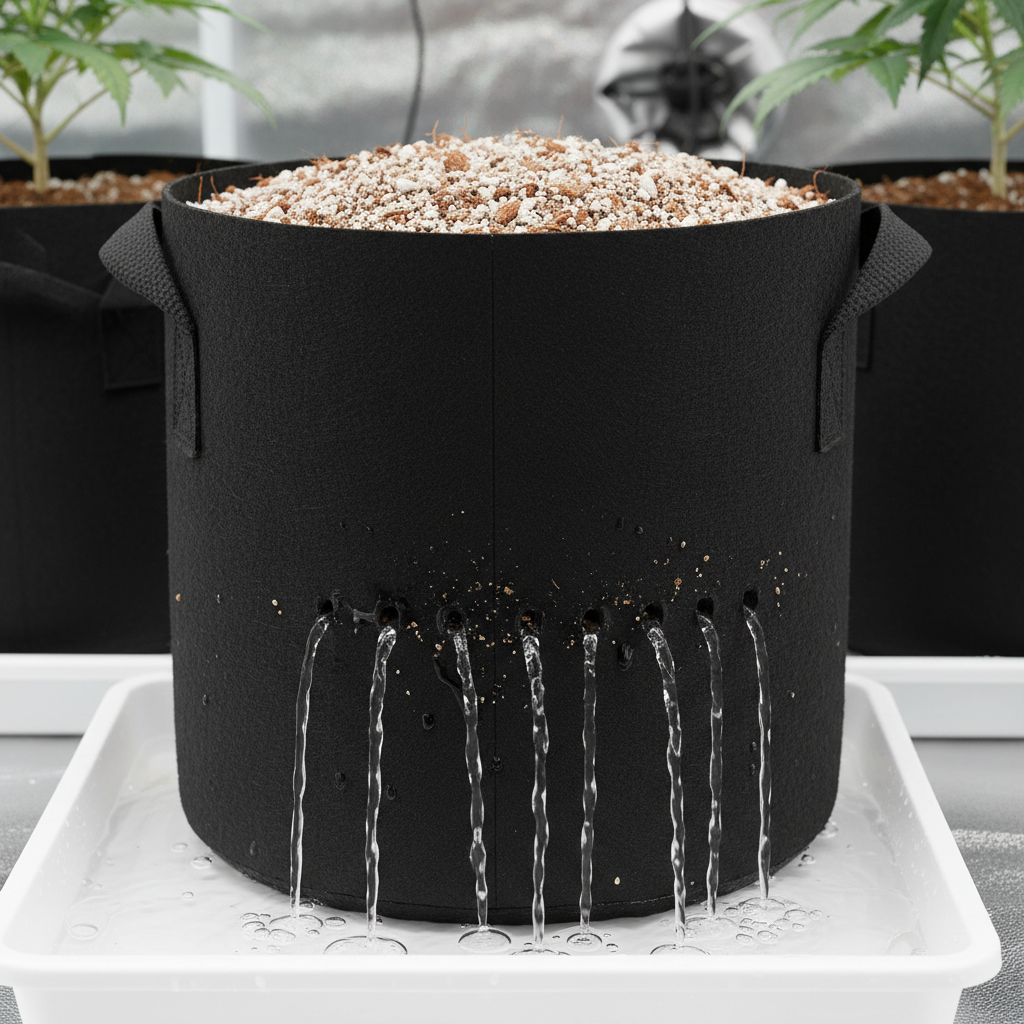
Excellent drainage through a fabric pot filled with coco perlite mix
How I Prep the Mix Before Planting
One step most beginners skip — and then wonder why their plants start slowly.
Step 1: Hydrate the coco. Mother Earth 70/30 arrives slightly compressed and needs to be hydrated before use. Pour the bag into a large container or tub and add pH-adjusted water (target 6.0). Mix until the coco is uniformly moist — like a wrung-out sponge. Not soaking wet, not dusty dry.
Step 2: Check runoff pH. Squeeze a handful of the hydrated coco and test the liquid that runs out. Target 5.8–6.2. If it's outside this range, flush with pH-adjusted water until it corrects.
Step 3: Fill your containers. Fill fabric pots to about 1 inch below the rim. Don't compact — the medium should feel light and airy. Compressing it defeats the purpose of the perlite.
Step 4: Pre-water with a diluted nutrient solution. Before transplanting, water the filled containers once with half-strength nutrient solution (MaxiGro at 3–4g/gallon, pH 6.0). This primes the medium with some baseline nutrition and confirms your drainage is working properly.
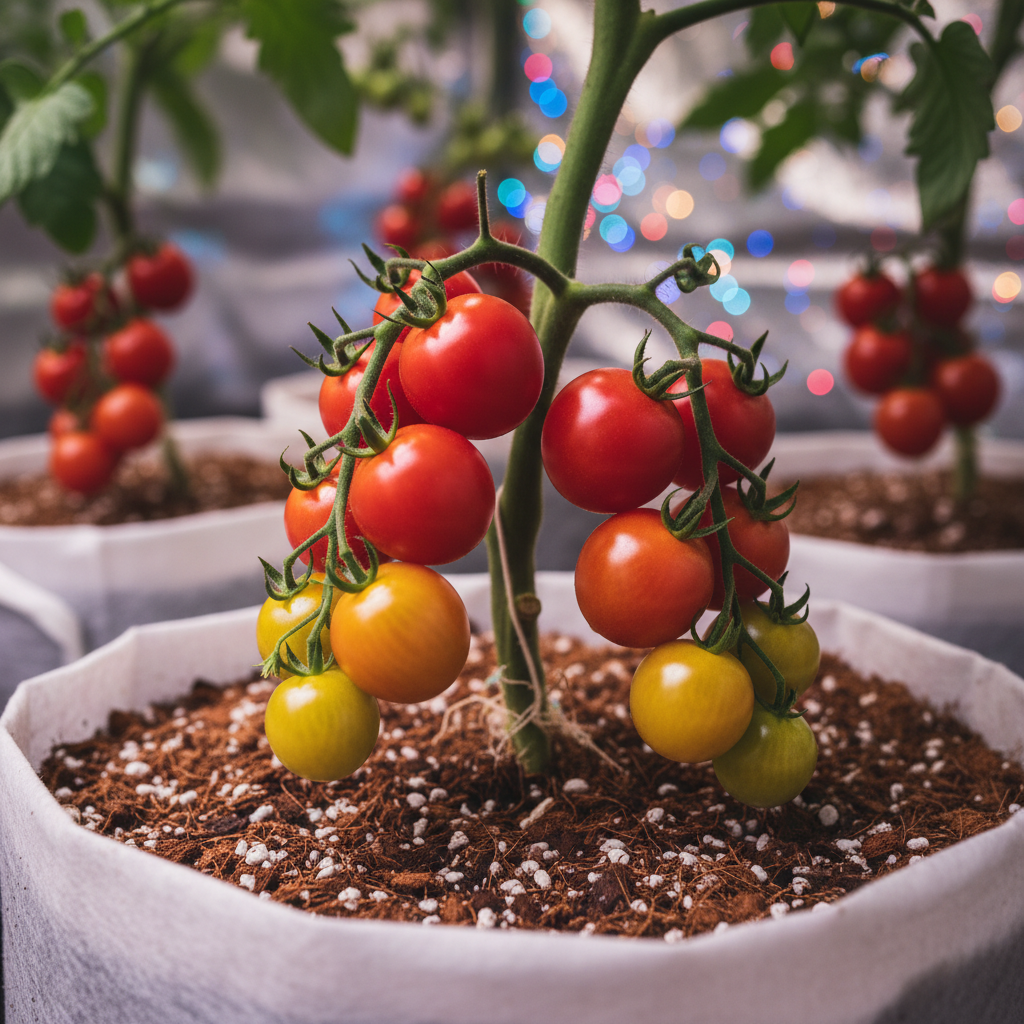
Ripe red and yellow cherry tomatoes hanging from an indoor tomato plant
Common Beginner Mistakes With Coco Perlite
Overwatering (More Common Than You'd Think)
Even though coco perlite drains well, you can still overwater. The symptom is drooping leaves despite a moist medium. The fix: extend time between waterings. Let the pot get noticeably lighter before the next feed.
Underwatering (The Other Extreme)
Coco perlite doesn't hold water as long as soil. In a warm tent, a 5-gallon pot with a large tomato can drink down surprisingly fast. Wilting plants with a light pot = thirsty tomatoes. Water immediately.
Forgetting That Coco Has No Nutrients
This catches beginners constantly. Coco coir is inert — it contains no plant-available nutrition. From day one, your water must contain nutrients. Plain water feeds nothing. Use a complete hydroponic formula from the first watering after planting.
Salt Buildup
Mineral salts from nutrients accumulate in coco over time. The symptom: white crusty deposits on the pot surface or medium, and plants that look stressed despite correct watering frequency. The fix: flush with plain pH-adjusted water every 2–3 weeks. Run water through until the runoff EC drops noticeably.
Not Managing pH
Coco perlite has no buffering capacity. If your nutrient solution pH drifts, your plants feel it immediately — nutrients lock out and deficiencies appear fast. Check and adjust pH at every feeding. Target 5.8–6.2 for coco grows.
The Best Nutrients to Pair With Coco Perlite
Because coco is inert, your nutrient choice matters a lot. Here's what works well:
MaxiGro + MaxiBloom (My Recommendation for Beginners)
General Hydroponics MaxiGro and MaxiBloom are dry, highly concentrated nutrients that dissolve in water. The two-product system is simple: MaxiGro from seedling until first flowers, MaxiBloom from first flower through harvest.
Mix at 5–7g per gallon, pH adjust to 5.9–6.1, and water as normal. It's the most beginner-friendly complete nutrient system for coco perlite grows.
Flora Series (For More Control)
The GH Flora Series (FloraGro, FloraBloom, FloraMicro) is a three-part liquid system that allows more precise adjustment at each growth stage. More complex than MaxiGro/MaxiBloom but gives experienced growers finer control.
Calcium-Magnesium
Coco coir has a natural cation exchange capacity that can bind calcium and magnesium, making them unavailable to your tomatoes. This leads to calcium deficiency and blossom end rot.
Solution: Add a CalMag supplement (like GH CALiMAGic or Botanicare Cal-Mag Plus) to every watering. 1–2ml per gallon is typically sufficient. This one addition prevents the most common deficiency issue in coco grows.
Does It Work for Self-Watering Systems?
Yes — with some nuance. The 70/30 coco perlite ratio wicks moisture upward effectively from a bottom reservoir, which is exactly what self-watering containers rely on.
Tips for self-watering with coco perlite:
- Keep reservoir nutrient concentration slightly lower than you would for hand-watering (plants absorb more consistently and don't need large pulses)
- Check the reservoir every 2–3 days — established tomato plants drink more than you expect
- Add CalMag to the reservoir solution — bottom-watering concentrates minerals in the upper zone over time, making calcium supplementation especially important
- Ensure the container has proper overflow drainage — coco perlite in self-watering containers can become waterlogged without an overflow port
Does It Work for Grow Tents?
Absolutely — it's arguably the best medium for grow tent tomato setups. Here's why it performs so well in tent environments:
Temperature management: Coco perlite stays cooler than dense soil, which matters in warm grow tents. Fabric pots with coco perlite allow excess heat to dissipate from the sides as well as the bottom.
Disease resistance: The natural antifungal properties of coco coir, combined with the fast drainage of perlite, create an environment where root rot and fungal issues are far less common than in standard soil.
Compatibility with LED lighting: High-intensity LED lights (like Mars Hydro TS series) drive fast growth and heavy fruiting — which in turn drives heavy water and nutrient demand. Coco perlite handles high feeding frequency without compaction or waterlogging, keeping up with the plant's accelerated pace.
Clean setup: No soil mess, no fungus gnats from soil insects, and easy cleanup between grows. In a shared living space, that matters.
My Indoor Tomato Roots Exploded After Switching
I want to be specific here because vague claims annoy me as a reader.
When I first switched from a premium potting soil to coco perlite, I transplanted two identical Sun Gold cherry tomato seedlings — one into 5-gallon fabric pot with coco perlite, one into 5-gallon pot with quality potting soil. Same tent. Same light. Same nutrients. Same care.
At three weeks: the coco perlite plant was visibly larger, with darker foliage and more lateral branching. At five weeks: the coco plant was 30–40% taller with a noticeably denser canopy. At first harvest: the coco plant produced its first ripe tomatoes four days earlier and with a noticeably larger initial cluster.
I've repeated that informal comparison a few times since. The results are consistent enough that I stopped using potting soil entirely for indoor tomato grows.
Honest Pros and Cons
Pros
- Exceptional root aeration — the #1 advantage for tomatoes
- Fast drainage prevents overwatering and root rot
- Precise nutrient control — you know exactly what's going in
- Clean and pest-resistant — no soil insects, minimal mold risk
- Reusable — can be cleaned and used again
- Consistent results across multiple grows
- Works in multiple systems — fabric pots, self-watering, drip
- Mother Earth's 70/30 ratio is pre-mixed — no measuring required
Cons
- No built-in nutrients — you must provide everything from day one
- Requires pH management — less forgiving than amended soil
- Watering frequency is higher than soil, especially in warm tents
- CalMag supplementation required — adds one product to your routine
- Slightly more expensive upfront than standard potting mix (though reusability offsets this)
Who Should Use Mother Earth 70/30 Coco Perlite?
You're an ideal candidate if you:
- Are growing tomatoes in a grow tent with an LED setup
- Use fabric pots or self-watering containers
- Want faster growth and heavier harvests than you're getting from soil
- Are comfortable adding nutrients to every watering
- Want to upgrade from potting soil without going fully hydroponic
- Have had recurring root rot or overwatering problems in the past
You might stick with soil if:
- You want to water and forget — coco requires more attention to feeding
- You're growing on a windowsill with natural light and irregular watering habits
- You're not ready to manage pH and EC regularly
For dedicated indoor growers with grow lights, Mother Earth 70/30 is simply the better medium in almost every measurable way.
Final Thoughts
Growing medium is one of those decisions that looks minor on paper but has an outsized effect on your results. Switching to coco perlite — specifically Mother Earth's 70/30 blend — is one of the highest-leverage upgrades an indoor tomato grower can make.
It's not complicated. It's not expensive. And once you see the difference in root health, growth rate, and harvest size, you'll understand why experienced indoor growers have quietly made coco perlite their default for years.
Check the current price for Mother Earth 70/30 on Amazon →
If you're pairing this with a grow tent setup, check out our Mars Hydro grow tent guide and our General Hydroponics nutrient breakdown. For troubleshooting any issues that come up during your grow, the Indoor Tomato Troubleshooter has you covered.
Recommended Products
Looking for products we personally recommend? See our complete list of trusted tools and supplies to help you grow better tomatoes.
Browse Recommended ProductsFrequently Asked Questions
Written by
Sweet Tomatos Team
We're a team of passionate indoor gardeners dedicated to helping beginners grow amazing tomatoes at home. With years of hands-on experience in hydroponics and indoor growing, we share what actually works.