AeroGarden
The Easiest Way to Grow Tomatoes Indoors
If you've ever wanted to grow tomatoes indoors without building a whole setup from scratch, AeroGarden is where most people start — and for good reason. It's automated, space-efficient, and surprisingly capable of producing real tomatoes. We've tested it extensively, and this is everything you need to know.
Best For
Beginners, apartment growers, anyone who wants a low-maintenance system that actually works.
Learning Curve
Very Low
Maintenance
Low — 10–15 min/week
Cost Range
$80–$300 depending on model
What Is AeroGarden?
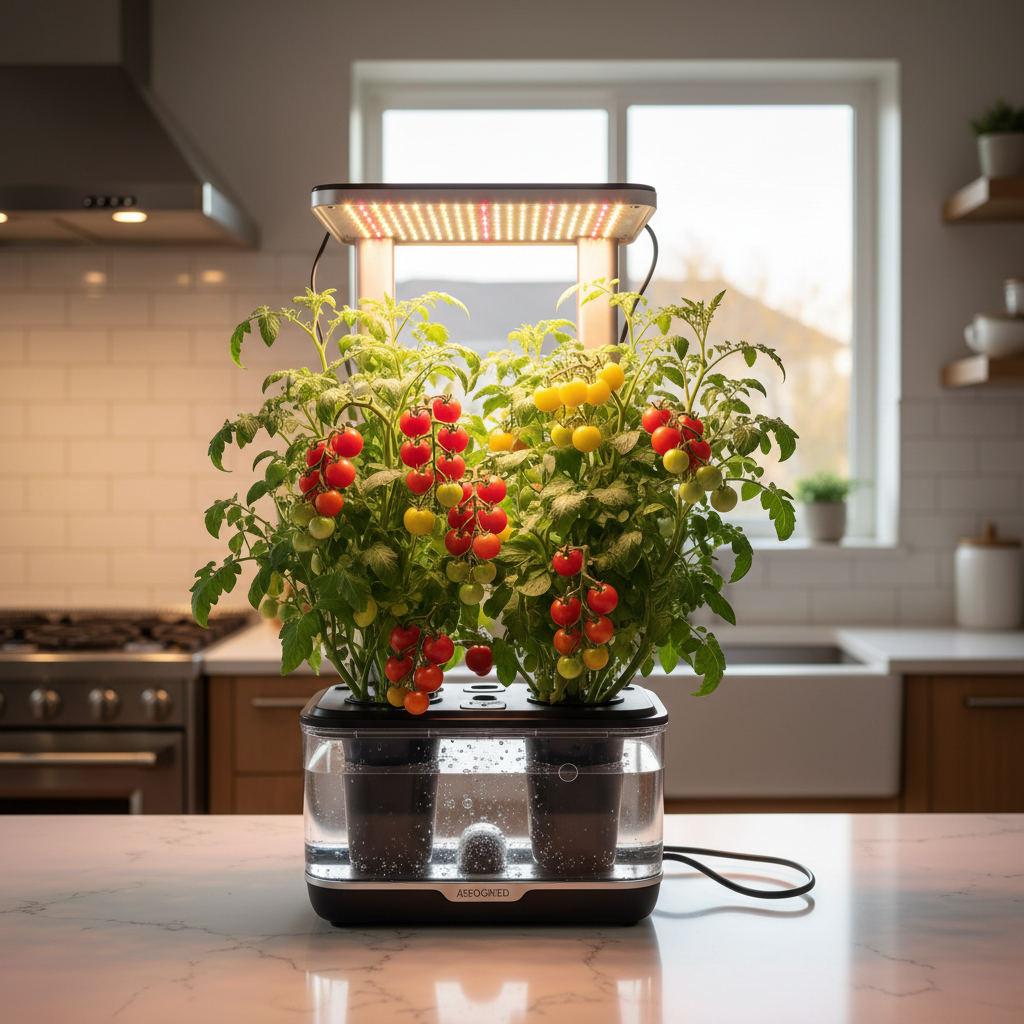
AeroGarden is a hydroponic smart garden system that uses liquid nutrients and a built-in LED grow light to grow plants in water. No soil, no complicated setup — you add water, pods, and nutrients, and the machine handles the lighting schedule automatically.
Pros
- Fully automated lighting schedule
- No soil mess
- Compact — fits on a countertop
- Great for cherry tomatoes
- Beginner-friendly nutrient system
- Available in multiple sizes (3, 6, 9, 24 pod)
Cons
- Pod cost adds up over time
- Larger tomato varieties struggle
- Needs regular nutrient top-ups
- Built-in light isn't ideal for heavy fruiting
- Limited root space in smaller models
Can AeroGarden Actually Grow Tomatoes?
Yes — with the right variety and a little technique, AeroGarden can produce impressive cherry tomato harvests.
Best Varieties
- 🍅 Tumbling Tom (Red & Yellow)
- 🍅 Tiny Tim
- 🍅 Red Robin
- 🍅 Window Box Roma
- 🍅 Micro Tom
What to Expect
Expect your first tomatoes in 8–12 weeks from seeding. Cherry tomato plants can produce dozens of fruits per harvest cycle. You won't get beefsteak tomatoes — stick with compact, determinate varieties.
Limitations
Indeterminate varieties will outgrow the system quickly. You'll need to prune aggressively to keep plants in bounds. The 24-pod model is the most capable for tomatoes.
Ready to get started with AeroGarden?
Check current pricing and availability on Amazon.
Complete AeroGarden Tomato Setup Guide
Lighting
The built-in LED runs on a programmed schedule (typically 16 hours on, 8 off). Raise the light arm as your tomato plants grow — keep it 1–3 inches above the tallest growth. For serious fruiting, add a supplemental grow light above the AeroGarden.
Nutrients
Use AeroGarden's liquid nutrients or switch to a tomato-specific hydroponic formula once fruiting begins. Feed every 2 weeks. Add nutrients to the reservoir, not just water. Tomatoes during fruiting need higher potassium — switch to a bloom formula.
Pollination
Indoors, there's no wind or bees. You must hand-pollinate. Gently shake each flower cluster daily when flowers are open, or use an electric toothbrush on the stem. This is the #1 reason AeroGarden tomatoes fail to set fruit.
Pruning
Prune suckers (the shoots growing between the main stem and branches) weekly. This is essential in AeroGarden to prevent the plant from overgrowing the light and taking energy away from fruit production.
Support
As tomato plants grow, they'll need support. Use soft tomato clips or garden twine tied to the light arm or an external support structure. Don't let branches hang unsupported — they'll break under fruit weight.
Water & Reservoir
Top up the reservoir every 3–5 days. Never let water run dry — roots exposed to air will die quickly in a hydroponic system. Check the water level daily when plants are large and actively growing.
Common AeroGarden Tomato Problems (And How to Fix Them)
Yellow leaves
Usually a nutrient deficiency or overdue reservoir refill. Check nutrient levels first, then ensure pH is between 5.5–6.5.
Flowers but no fruit
You're not pollinating. Shake flowers daily or use an electric toothbrush on the stem when flowers are open.
Leggy, stretched plants
Light arm is too far from the canopy. Lower it to 1–2 inches above the tops. Also ensure you're running 16+ hours of light.
Root rot (brown, slimy roots)
Reservoir temperature is too warm or oxygen is depleted. Add a small aquarium air stone to oxygenate. Keep reservoir below 72°F.
Slow growth
Check nutrient schedule — tomatoes need feeding every 2 weeks minimum. Also ensure 16 hours of light daily.
Need more help diagnosing your tomato plant?
Open Tomato Troubleshooter →Beginner Mistakes to Avoid
- Using tomato pod seed kits designed for AeroGarden without checking the variety — many are too vigorous for the system
- Forgetting to hand-pollinate — the #1 reason for no tomatoes
- Not raising the light arm as the plant grows — leads to light burn on tops and shade on lower leaves
- Skipping the nutrient top-up and just adding water — dilutes nutrients to useless levels
- Planting too many pods — for tomatoes, use 1–3 pods max in a 9-pod model
Recommended Accessories
Supplemental LED Grow Light
The built-in AeroGarden light is good but not enough for heavy fruiting. Add a small LED panel above for dramatically better yields.
Hydroponic Tomato Nutrients
Switch from AeroGarden's general nutrients to a tomato-specific formula once flowers appear. Higher K and P for fruiting.
Electric Toothbrush (old one)
The single best pollination tool for AeroGarden tomatoes. Vibrate the flower stems when open.
Tomato Clips & Twine
Essential for supporting heavy fruiting branches. Use soft silicone clips to avoid stem damage.
🍅 My Recommended AeroGarden Setup
If I was starting over today…
If I was starting with AeroGarden today, I'd get the 24-pod Harvest Elite, plant 2–3 Tumbling Tom pods, add a small Mars Hydro SP 150 overhead, and hand-pollinate every morning. That setup has consistently given me 3–4 lbs of cherry tomatoes per cycle.
Frequently Asked Questions
Ready to Start Growing?
Explore more beginner guides, troubleshooting help, and system comparisons to make sure your first indoor tomato harvest is a success.
As an Amazon Associate, we earn from qualifying purchases at no extra cost to you.