Why Are My Tomato Leaves Turning Yellow? (And How to Fix It Fast)
Yellowing tomato leaves are one of the most common frustrations for home gardeners — but don't panic. This complete guide walks you through every possible cause, from overwatering to nutrient deficiencies, and gives you clear, actionable fixes to get your plants green and thriving again.
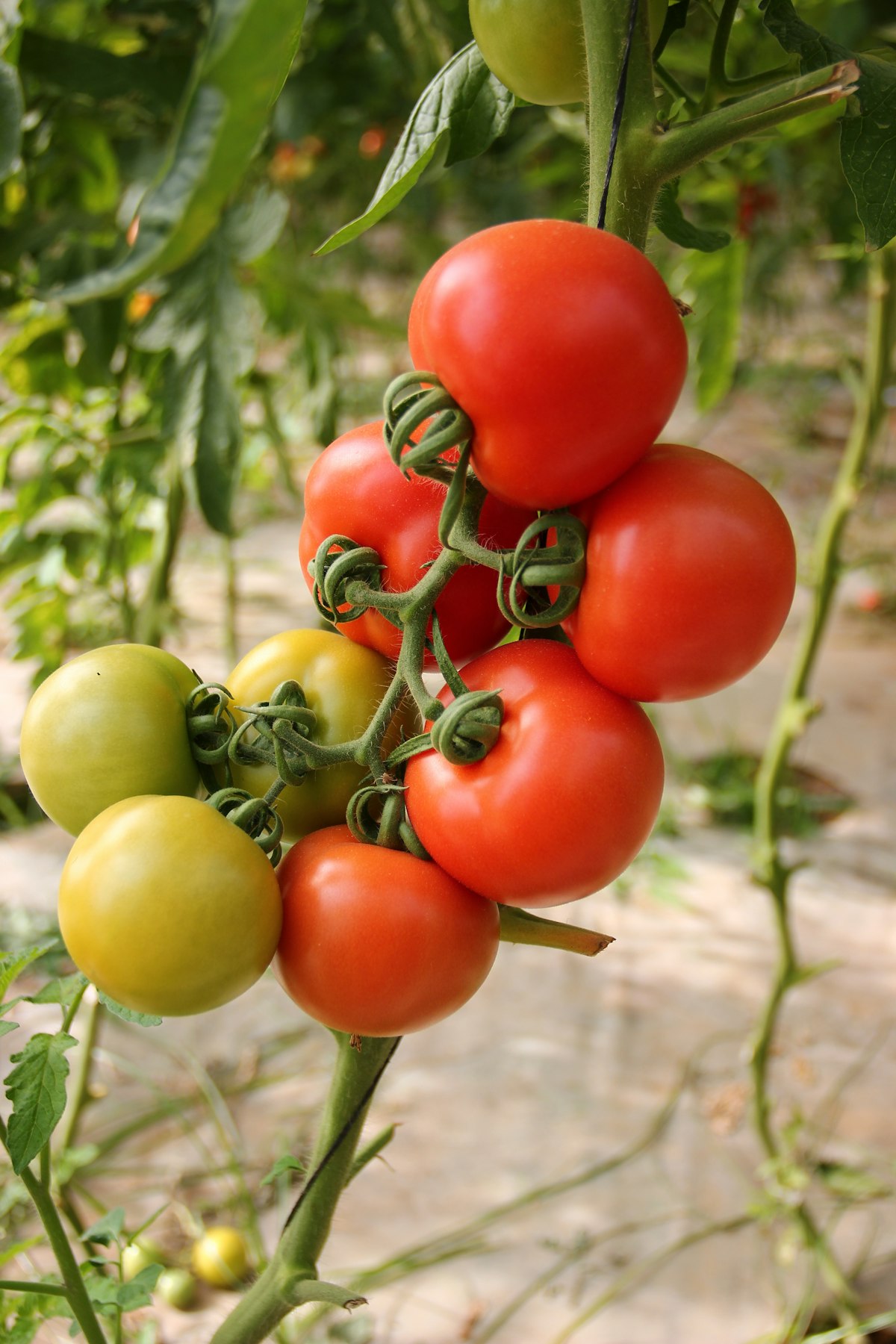
The Frustrating Truth About Yellow Tomato Leaves
You check on your tomato plant one morning, excited to see new growth — and instead you notice it: leaves that were bright green just days ago are now pale, yellow, and limp.
It's one of the most disheartening sights in the garden. But here's the good news: yellow tomato leaves are incredibly common, and in most cases, they're completely fixable.
The key is figuring out why your tomato leaves are turning yellow before you take action. Because the fix for overwatering is the exact opposite of the fix for underwatering — and doing the wrong thing can make things worse.
This guide covers every possible cause of yellow tomato leaves, how to tell them apart, and exactly what to do to bring your plant back to full health.
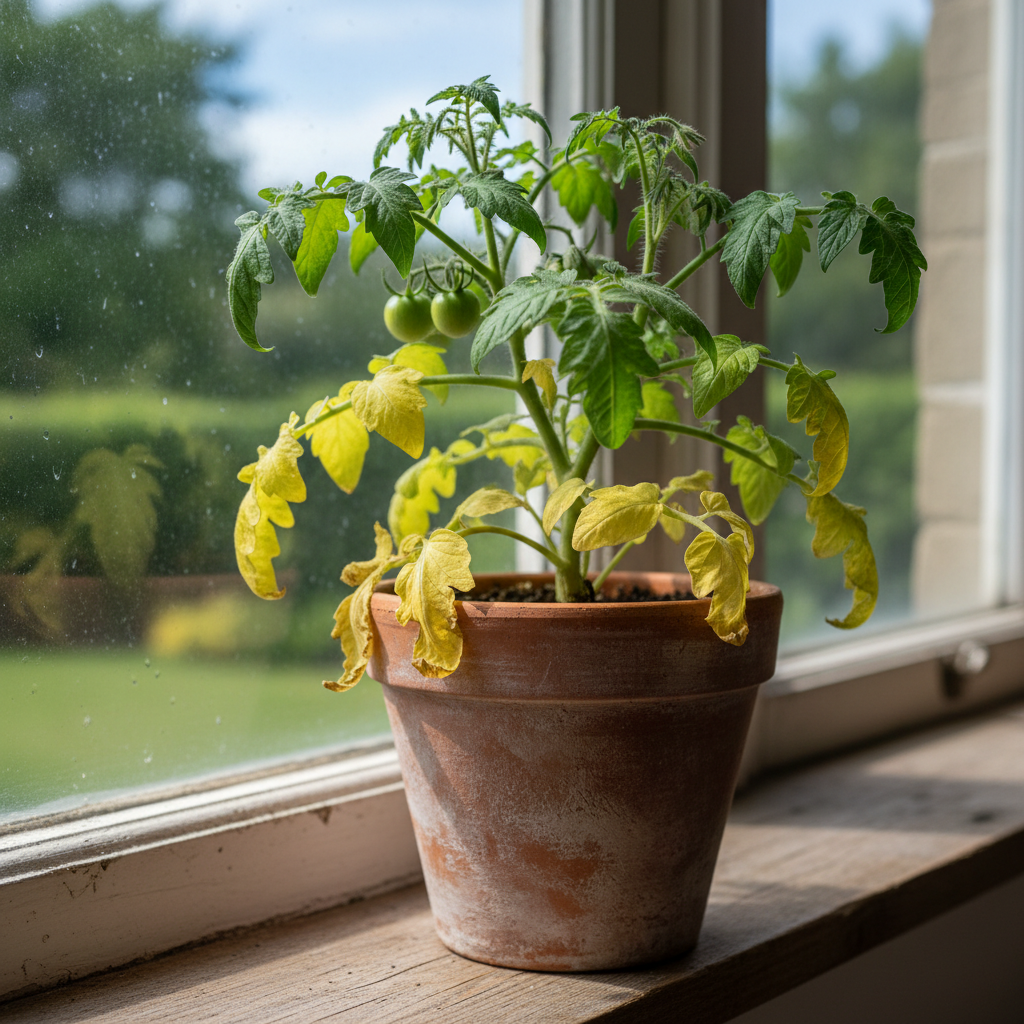
Indoor tomato plant with yellowing lower leaves on a windowsill
Quick Answer: Why Are Tomato Leaves Turning Yellow?
Tomato leaves turn yellow due to one or more of these causes:
- Overwatering (the #1 cause for indoor growers)
- Nitrogen or other nutrient deficiency
- Natural aging of lower leaves
- Too little light (especially indoors)
- Root rot from soggy soil
- Pests like spider mites or aphids
- Fungal or viral disease
- Temperature extremes (too hot or too cold)
Read on to find exactly which one is causing your problem — and what to do about it today.
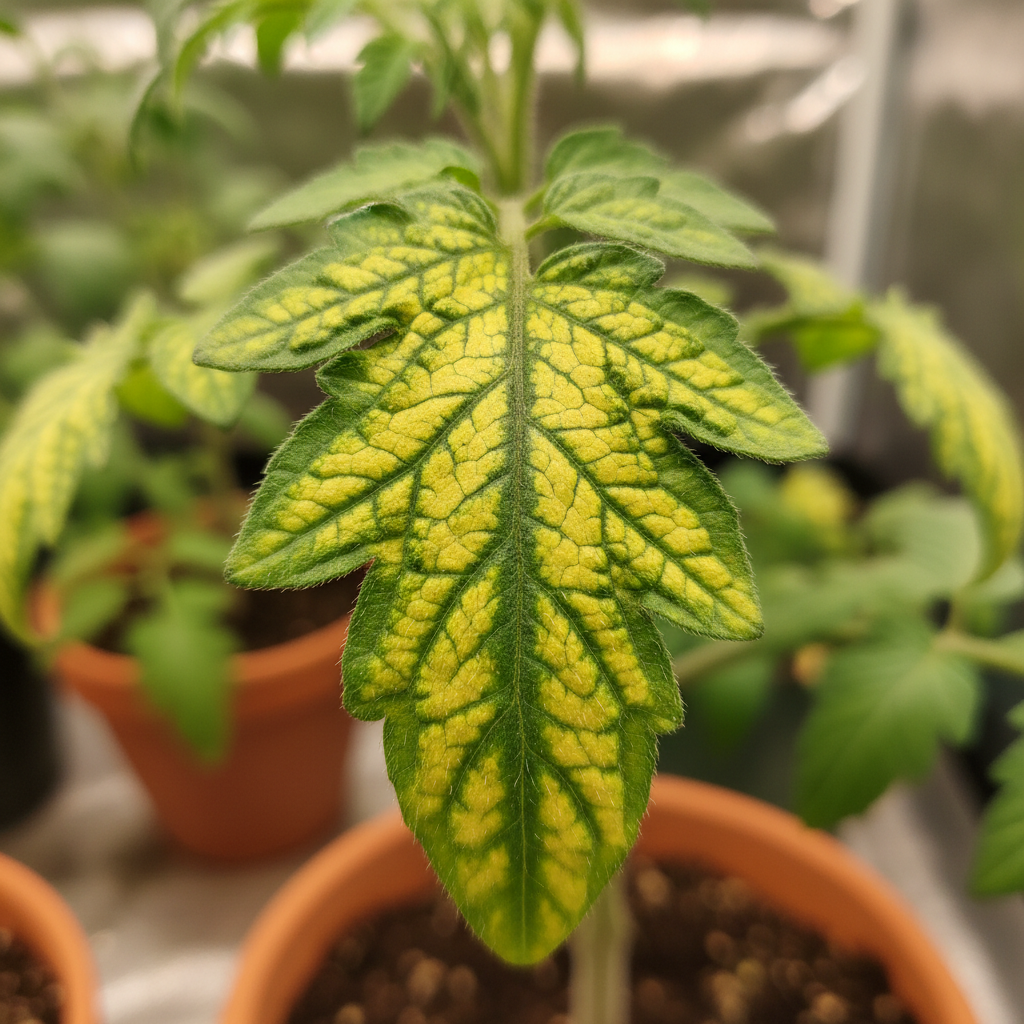
Close-up of tomato leaf showing interveinal chlorosis nutrient deficiency
1. Overwatering — The #1 Cause of Yellow Tomato Leaves
If you're growing tomatoes indoors or in containers, overwatering is by far the most common reason for yellowing leaves.
It feels counterintuitive — you're giving your plant more water because you want it to be healthy, but too much moisture actually drowns the roots and prevents them from absorbing oxygen and nutrients.
Signs your tomato is overwatered:
- Leaves turn pale yellow, starting from the lower leaves
- Soil feels consistently wet or soggy
- Leaves may feel soft or limp even when the plant isn't wilting
- You may see mold growing on the soil surface
- Fungus gnats hovering around the pot (they love wet soil)
The Fix:
Stop watering immediately and allow the soil to dry out. Before you water again, stick your finger 2 inches into the soil — if it's still moist, wait another day.
Make sure your container has drainage holes and that water isn't sitting in the saucer beneath the pot. Empty any standing water after each watering session.
Pro Tip: The best time to water tomatoes is in the morning, deeply and thoroughly — then let the soil dry significantly before watering again. A consistent schedule beats a generous one.
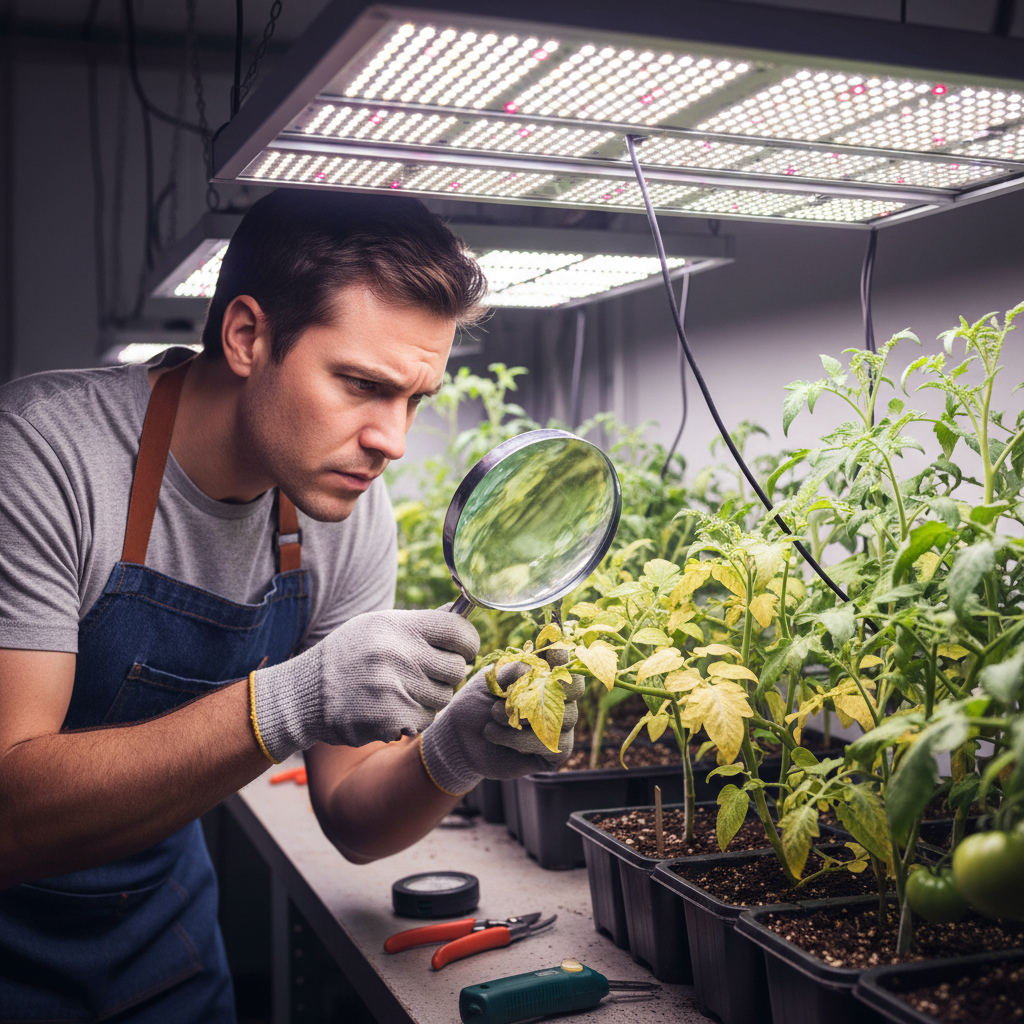
Person inspecting yellow tomato leaves under a grow light with magnifying glass
2. Underwatering — The Other Watering Extreme
On the flip side, not watering enough will also cause yellow leaves, though the symptoms look a little different.
Signs your tomato is underwatered:
- Leaves turn yellow AND curl inward
- Soil is bone dry and pulling away from the sides of the pot
- Plant wilts dramatically in the afternoon
- Leaves feel dry and papery to the touch
The Fix:
Water deeply until water flows freely from the drainage holes. Don't just give it a splash — the entire root zone needs to be saturated. If the soil has gotten extremely dry, it may repel water at first. Water slowly in circles and allow it to absorb before adding more.
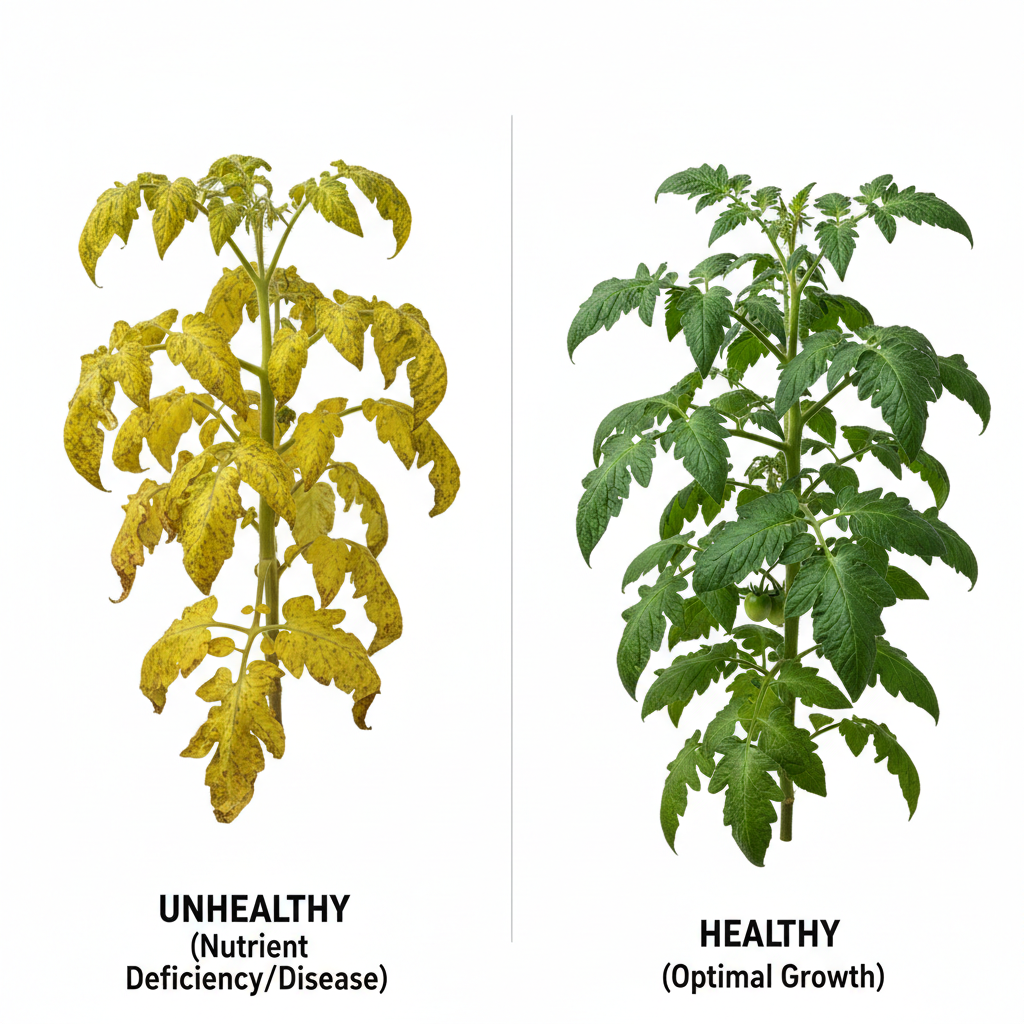
Side by side comparison of unhealthy yellow and healthy green tomato leaves
3. Nitrogen Deficiency — The Silent Nutrient Thief
After watering issues, nitrogen deficiency is the most frequent cause of yellow tomato leaves — especially in container-grown plants.
Nitrogen is what gives plants their rich green color. When the soil runs low, the plant starts pulling nitrogen from its oldest leaves to feed new growth. The result? A wave of yellowing that starts at the bottom of the plant and slowly climbs upward.
Telltale signs of nitrogen deficiency:
- Uniform yellowing (no spots or patterns)
- Starts with the oldest, lowest leaves
- Progresses steadily upward if untreated
- Plant looks pale and washed out overall
- Slow growth and small leaves
The Fix:
Apply a balanced tomato fertilizer that includes nitrogen (N). Look for fertilizers with a higher first number in the N-P-K ratio (like 10-5-5). Water-soluble fertilizers work fastest — you can often see improvement within 7–10 days.
For container plants, fertilize every 1–2 weeks throughout the growing season. Nutrients leach out of containers far faster than garden beds.
Pro Tip: Fish emulsion fertilizer is an excellent organic nitrogen source that works quickly and improves overall soil health. Just be prepared for the smell!
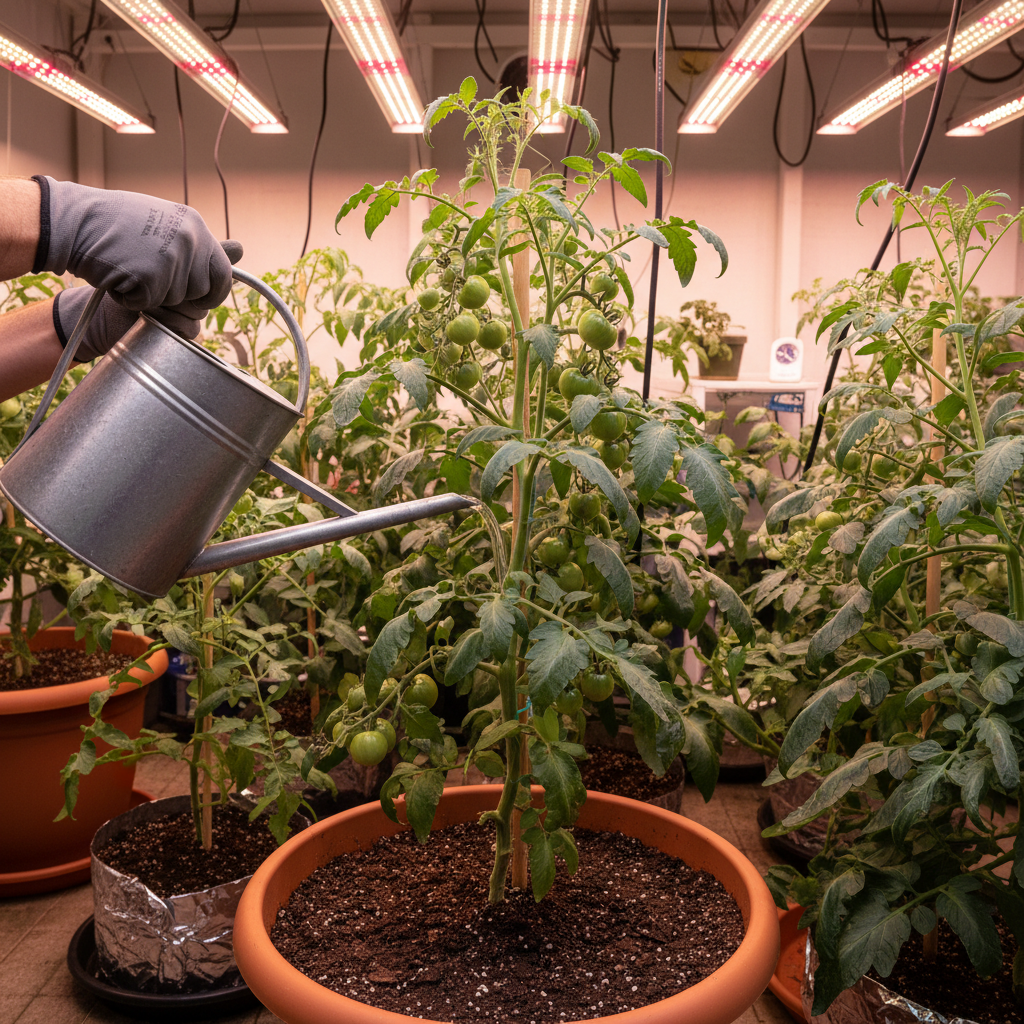
Gardener watering indoor tomato plant correctly with a watering can
4. Other Nutrient Deficiencies That Cause Yellowing
Nitrogen isn't the only nutrient that can cause yellow leaves. Here's a quick guide to the other common deficiencies:
Iron Deficiency (Chlorosis)
Leaves turn yellow but the veins stay green — this distinctive pattern is the hallmark of iron deficiency. It often happens when soil pH is too high (above 7.0), which locks iron out even when it's present in the soil.
Fix: Test your soil pH and adjust to 6.0–6.8. Apply chelated iron fertilizer as a foliar spray for fast results.
Magnesium Deficiency
Yellowing between the veins on older leaves, while the veins remain green. Magnesium is what plants use to build chlorophyll — without it, leaves can't stay green.
Fix: Dissolve 1 tablespoon of Epsom salt (magnesium sulfate) in a gallon of water and apply as a foliar spray or soil drench. Repeat weekly until improvement shows.
Potassium Deficiency
Leaf edges and tips turn yellow or brown, like the leaves have been scorched around the margins. New growth may look fine while older leaves suffer.
Fix: Apply a tomato-specific fertilizer with higher potassium (the third number in N-P-K). Tomatoes are heavy potassium feeders, especially when fruiting.
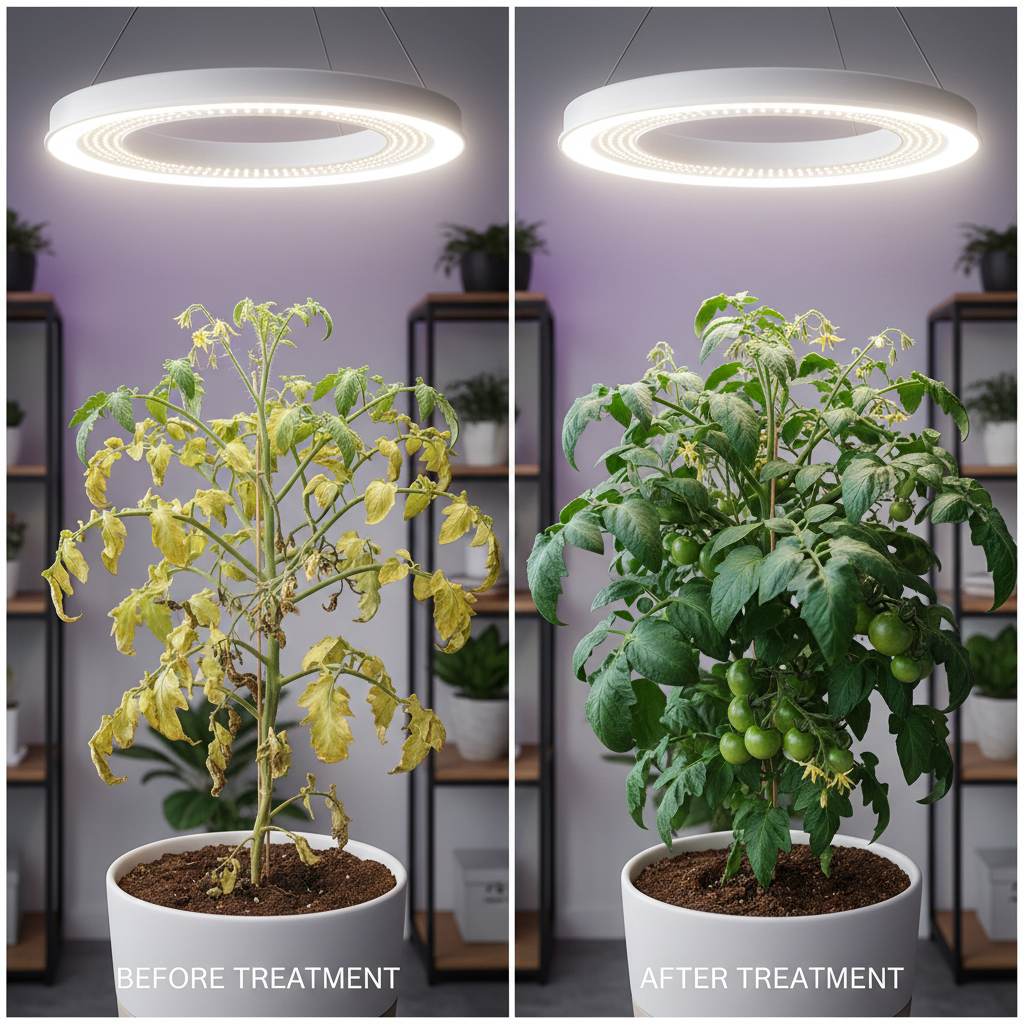
Recovered healthy indoor tomato plant with deep green leaves after treatment
5. Sunlight and Temperature Problems
Not Enough Light
Indoor tomatoes are especially vulnerable to light deficiency. Without enough bright light, plants can't photosynthesize efficiently, which leads to pale, yellowish leaves and weak, leggy growth.
Tomatoes need 8–10 hours of direct sunlight outdoors, or the equivalent under grow lights. A sunny windowsill often isn't enough — especially in winter months or north-facing rooms.
Fix: Move your plant to your brightest window (south or west-facing), or invest in a full-spectrum LED grow light. Position lights 4–8 inches above the plant and run for 14–16 hours per day.
Temperature Stress
Tomatoes are tropical plants at heart. They thrive between 65–85°F (18–29°C). Outside this range, they struggle.
- Too cold (below 55°F): Nutrient uptake shuts down, causing yellowing and purple-tinged stems
- Too hot (above 95°F): Leaf scorch, flower drop, and stress-induced yellowing
Fix: Keep indoor tomatoes away from cold drafts, air conditioning vents, and heating elements. Maintain a stable temperature zone for best results.
Pro Tip: If your plant's lower leaves turn yellow in winter, check if they're near a cold window or exterior wall. Even a 5-degree temperature difference at root level can affect nutrient absorption.
6. Pests That Cause Yellow Tomato Leaves
Some of the tiniest garden troublemakers can cause big yellowing problems.
Spider Mites
These microscopic pests live on the undersides of leaves and suck the life out of them, leaving tiny yellow stippled dots that eventually merge into full yellowing. You may see fine webbing between leaves.
Fix: Blast leaves with a strong stream of water to dislodge mites. Apply neem oil spray every 3–5 days until resolved.
Aphids
Soft, pear-shaped insects clustered on new growth and undersides of leaves. They extract sap, causing distorted, yellowing leaves.
Fix: Remove by hand or with a strong water spray. Apply insecticidal soap or neem oil solution.
Whiteflies
Tiny white moths that flutter up when you disturb the plant. Their feeding causes yellow, mottled leaves.
Fix: Yellow sticky traps are excellent for whitefly control. Also apply insecticidal soap to leaf undersides where they lay eggs.
7. Fungal and Viral Diseases
Early Blight
Dark brown spots with yellow halos, usually starting on lower, older leaves. Early blight is a fungal disease that spreads rapidly in humid conditions.
Fix: Remove all affected leaves immediately. Apply copper-based fungicide spray. Improve air circulation and avoid wetting the foliage when watering.
Fusarium and Verticillium Wilt
Yellowing that's uneven across the plant — one side or section may yellow while others stay green. These soil-borne fungal diseases block the plant's vascular system.
Fix: Unfortunately, there's no cure for fusarium or verticillium wilt. Remove and dispose of the plant. Sterilize your containers before reusing. Choose disease-resistant varieties next time (look for 'F' or 'V' on the seed packet).
Tomato Mosaic Virus
Irregular yellow and green mosaic patterning on leaves, often accompanied by curling or distortion.
Fix: No cure exists for viral infections. Remove the plant to prevent spread. Wash hands and sanitize tools before touching other plants.
8. Special Challenges for Indoor Tomato Growers
Growing tomatoes indoors is incredibly rewarding, but it comes with a unique set of yellowing challenges.
Common indoor-specific yellow leaf causes:
- Grow light too far away — plants stretch and pale without intense light
- Inconsistent watering — indoor plants have smaller soil volume and dry out (or stay wet) faster
- Poor air circulation — stagnant indoor air encourages fungal problems
- Pot too small — rootbound plants can't absorb nutrients efficiently
- Low humidity — very dry indoor air can stress plants in winter
Pro Tip: If you're growing indoors under grow lights, invest in a small USB fan to keep air moving around your plants. Just 30 minutes of gentle airflow per day dramatically reduces fungal disease risk and strengthens stems.
9. Step-by-Step Recovery Plan for Yellow Tomato Leaves
Not sure where to start? Follow this simple diagnostic sequence:
Step 1: Check the soil moisture Stick your finger 2 inches into the soil. Wet = back off watering. Bone dry = water immediately.
Step 2: Look at the pattern of yellowing
- Bottom leaves only → likely nitrogen deficiency or natural aging
- Yellow leaves with green veins → likely iron or magnesium deficiency
- Yellow spots with dark centers → likely fungal disease
- Entire plant yellowing uniformly → likely watering or light issue
Step 3: Inspect the undersides of leaves Look for tiny bugs, webbing, or eggs. If pests are present, treat before doing anything else.
Step 4: Remove affected leaves Using clean, sharp scissors, remove any leaves that are more than 50% yellow. This reduces disease spread and lets the plant focus energy on healthy growth.
Step 5: Apply the right fix Based on your diagnosis: adjust watering, apply fertilizer, improve lighting, or treat for pests/disease.
Step 6: Be patient Existing yellow leaves won't turn green again. Judge your success by new leaves growing in healthy and green. Give it 10–14 days before reassessing.
10. How to Prevent Yellow Tomato Leaves
The best fix is prevention. Here's how to keep your tomato plants green and thriving:
- Water consistently — deeply but infrequently, checking soil moisture before each watering
- Fertilize regularly — every 1–2 weeks with a complete tomato fertilizer
- Ensure strong light — 8+ hours of sun or 14+ hours under grow lights
- Prune lower leaves — remove leaves below the first fruit set to improve airflow
- Inspect weekly — catch pests and disease early before they spread
- Use quality potting mix — not garden soil, which compacts and drains poorly in containers
- Size your pot correctly — minimum 5 gallons per plant, 10+ gallons for indeterminate varieties
You've Got This, Tomato Grower
Seeing your tomato plant struggle with yellow leaves is genuinely discouraging — we get it. But the fact that you're here, reading and learning, already puts you miles ahead of most home gardeners.
Almost every case of yellow tomato leaves is fixable. And once you understand what your plant is trying to tell you, you'll never feel confused by yellow leaves again.
Start with the most likely cause (usually watering), make one change at a time, give it a week or two, and watch your plant bounce back.
🍅 Ready to take your tomato growing further? Explore our complete guides on growing tomatoes indoors, hydroponic tomato setups, and our interactive Tomato Troubleshooter for quick symptom diagnosis.
Happy growing — your best harvest is ahead of you.
Recommended Products
Looking for products we personally recommend? See our complete list of trusted tools and supplies to help you grow better tomatoes.
Browse Recommended ProductsFrequently Asked Questions
Written by
Sweet Tomatos Team
We're a team of passionate indoor gardeners dedicated to helping beginners grow amazing tomatoes at home. With years of hands-on experience in hydroponics and indoor growing, we share what actually works.