How To Grow Indoor Tomatoes: The Complete Beginner's Guide
Learn everything you need to grow delicious tomatoes indoors year-round. From choosing varieties to harvesting, this step-by-step guide covers it all.
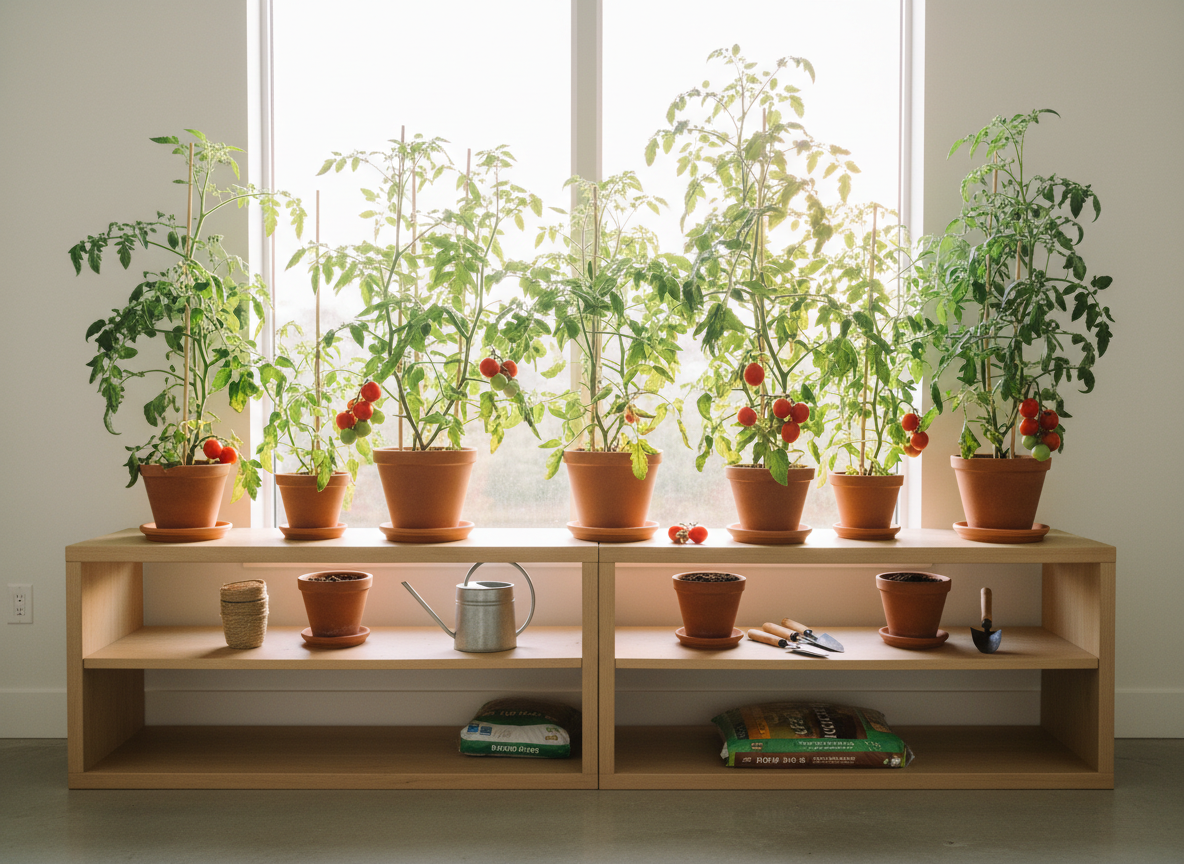
I'll never forget the first time I bit into a tomato I grew on my kitchen windowsill. It was January, freezing outside, and this little cherry tomato burst with more flavor than anything I'd bought at the grocery store in months. That's the magic of growing tomatoes indoors.
Whether you live in an apartment with no garden, deal with harsh winters, or just want fresh tomatoes year-round, indoor growing is absolutely achievable. This guide will walk you through everything — from picking the right variety to harvesting your first tomato.
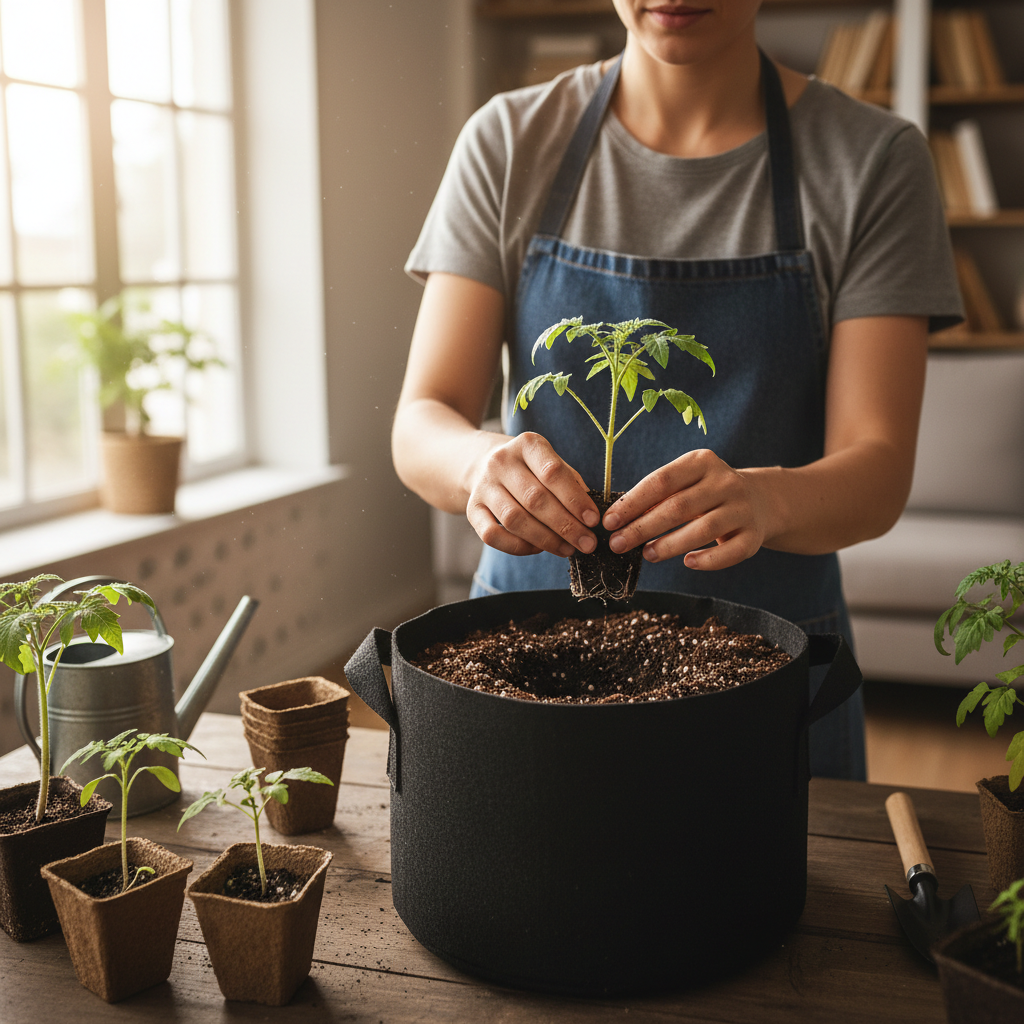
Beginner gardener transplanting tomato seedling into a fabric pot indoors
Why Grow Tomatoes Indoors?
Before we dive into the how, let's talk about the why:
- Year-round harvest — No more waiting for summer
- No weather worries — Rain, frost, and heat waves won't affect your plants
- Fewer pests — Indoor plants face far fewer pest problems
- Better flavor — Vine-ripened tomatoes taste infinitely better than store-bought
- It's therapeutic — Caring for plants reduces stress and improves mood
- Educational — Great for kids and families
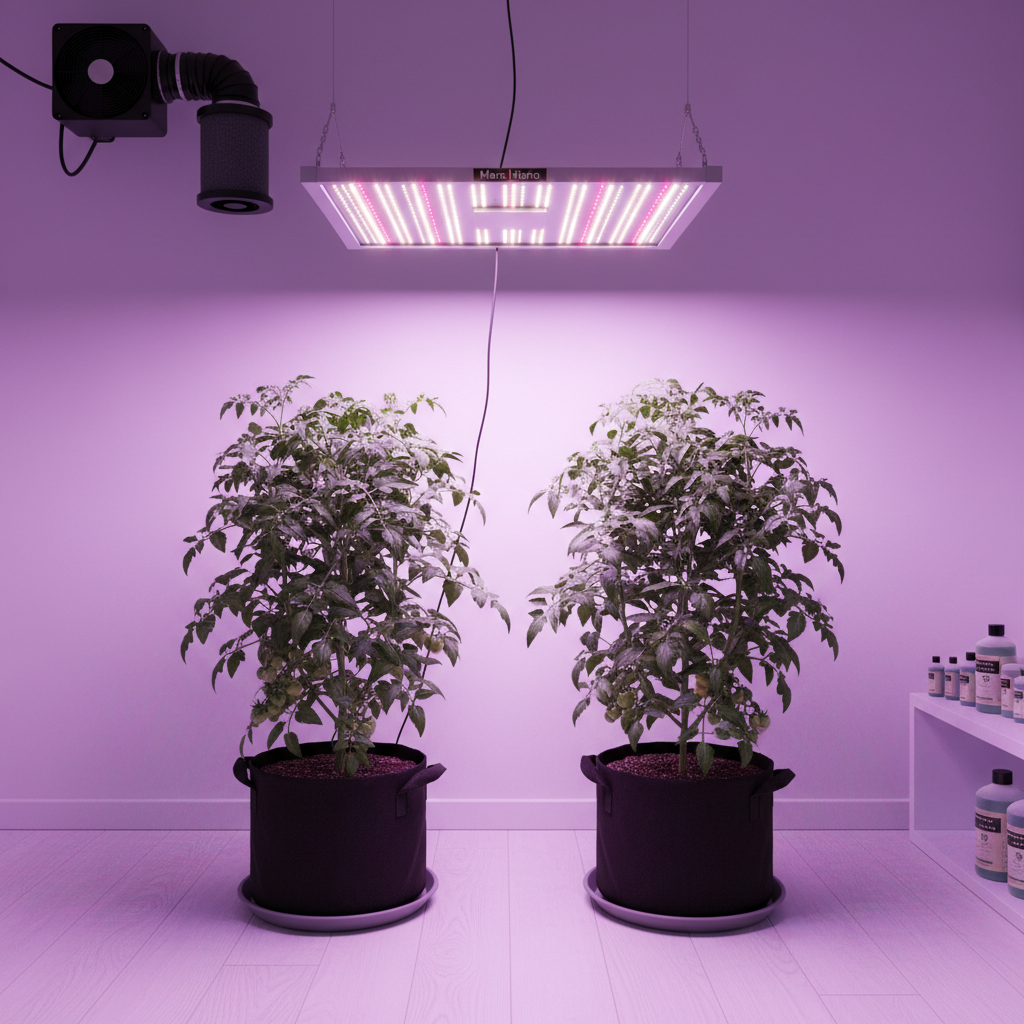
Modern indoor grow setup with Mars Hydro LED light over tomato plants in fabric pots
Choosing the Right Tomato Varieties for Indoor Growing
This is possibly the most important decision you'll make. Not all tomatoes are suited for indoor growing. You want compact, bushy varieties that don't need massive root systems or grow 6 feet tall.
Best Determinate (Bush) Varieties for Indoors
- Tiny Tim — The classic indoor tomato. Grows only 12-18 inches tall with sweet cherry-sized fruit. Perfect for windowsills.
- Red Robin — Super compact at 8-12 inches. Produces abundant small, sweet tomatoes. Great for beginners.
- Micro Tom — The world's smallest tomato plant at just 6-8 inches. Fun novelty, though fruit is tiny.
- Window Box Roma — A compact determinate that produces paste-style tomatoes. Great for cooking.
- Totem — Sturdy, compact plant reaching about 20 inches. Produces medium-sized fruit.
Best Cherry/Small Varieties
- Tumbling Tom — Trailing variety perfect for hanging baskets
- Sweet Million — Prolific producer of sweet cherry tomatoes
- Sweetie — Extremely sweet, small fruits in clusters
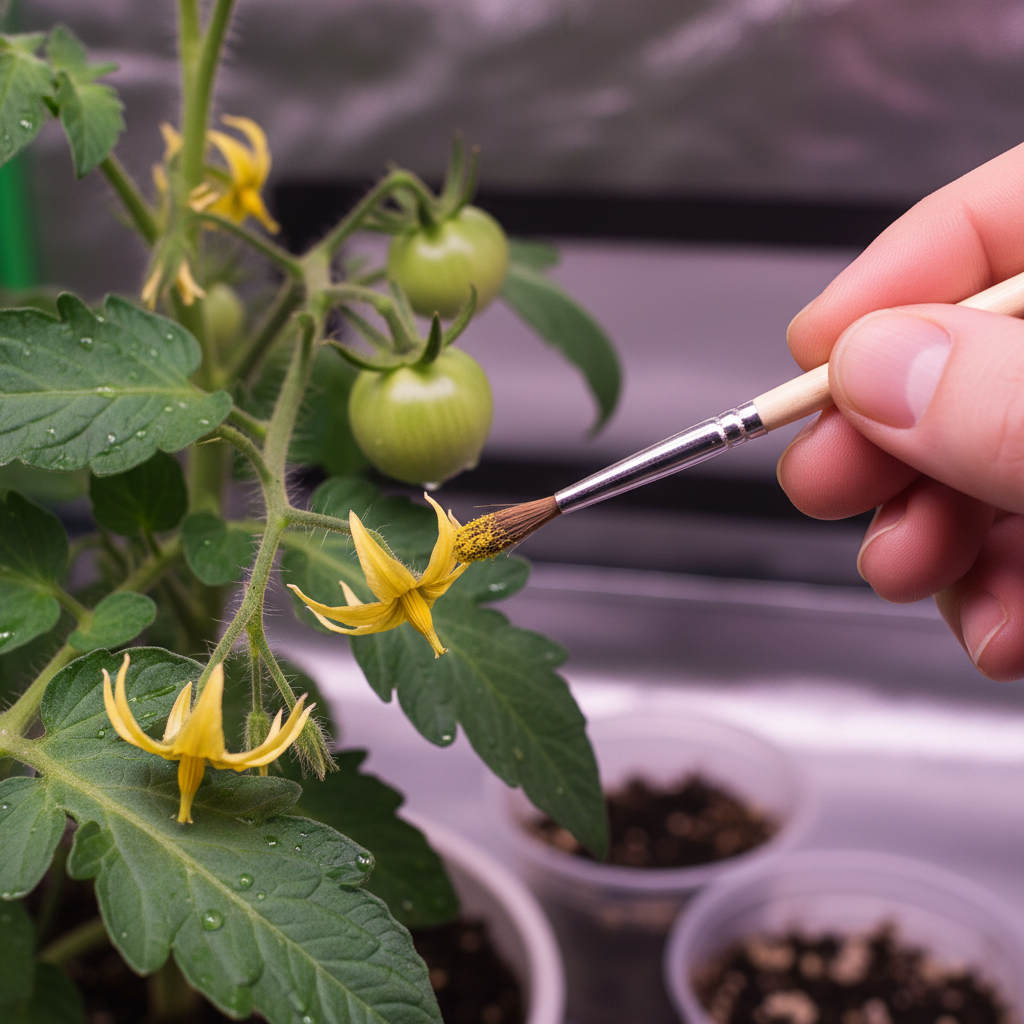
Hand pollinating indoor tomato flowers with a small paintbrush
Essential Equipment for Indoor Tomato Growing
Let's break down what you actually need:
1. Containers
Choose pots that are at least 5 gallons for standard varieties, or 2-3 gallons for ultra-compact types like Tiny Tim. Requirements:
- Drainage holes (absolutely essential)
- Saucer to catch runoff
- Light-colored pots stay cooler
- Self-watering pots are excellent for consistent moisture
2. Growing Medium
Don't use garden soil — it compacts in containers and may harbor pests. Instead, use:
- High-quality potting mix
- Perlite mixed in for drainage (about 20%)
- Optional: coconut coir for moisture retention
The ideal mix is light, well-draining, and holds moisture without becoming waterlogged.
3. Lighting — The Most Critical Factor
This is where most indoor tomato growers succeed or fail. Tomatoes are sun-loving plants that need intense light to produce fruit.
The truth about windows: Even a south-facing window typically provides only 4-6 hours of direct light — not enough for fruiting tomatoes. Windows also lose light intensity compared to direct outdoor sun.
LED grow lights are essential. Here's what to look for:
- Full-spectrum (mimics natural sunlight)
- At least 2,000 lumens for a small setup
- Timer capability (or use a separate timer)
- Adjustable height
- Energy efficient (LED over fluorescent)
Position lights 6-12 inches above plant tops and run them 14-16 hours daily during vegetative growth, reducing to 12-14 hours once flowers appear.
4. Temperature and Humidity
Most homes naturally fall in the ideal range:
- Daytime: 70-85°F (21-29°C)
- Nighttime: 60-70°F (15-21°C)
- Humidity: 40-60%
Avoid placing plants near heating vents, air conditioners, or drafty windows. Temperature swings stress plants and can cause flower drop.
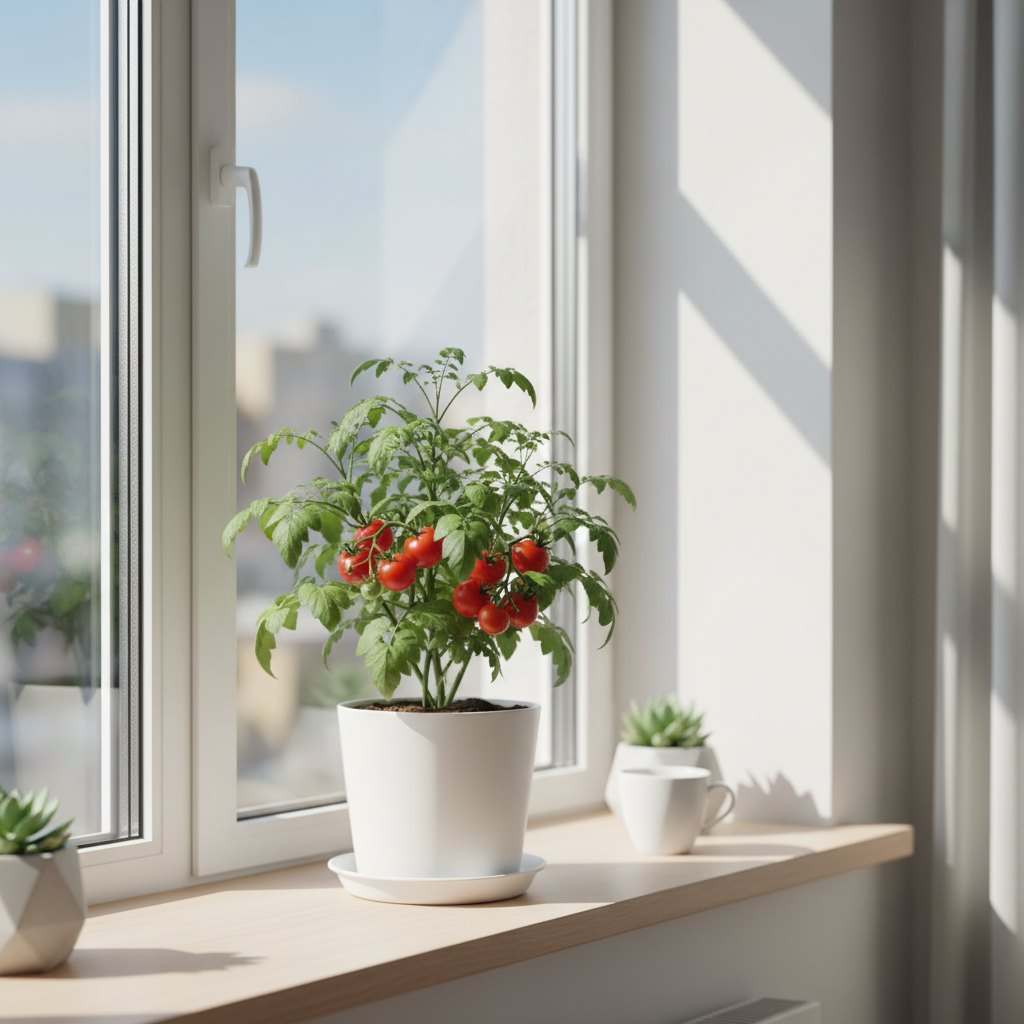
Compact indoor tomato plant on a bright sunny apartment windowsill with cherry tomatoes
Step-by-Step: Growing Indoor Tomatoes from Seed
Step 1: Start Your Seeds
- Fill seed starting cells with moist seed starting mix
- Plant seeds 1/4 inch deep, 2 seeds per cell
- Cover with a humidity dome or plastic wrap
- Place on a seedling heat mat (70-80°F soil temp)
- Keep moist but not waterlogged
- Seeds germinate in 5-10 days
Step 2: Care for Seedlings
Once seeds sprout:
- Remove the humidity dome
- Position grow lights 4-6 inches above seedlings
- Run lights 14-16 hours daily
- Thin to one seedling per cell (cut the weaker one)
- Water when surface feels dry
- Begin feeding with diluted fertilizer at 2 weeks
Step 3: Transplant to Final Containers
When seedlings have 4-6 true leaves (about 4-6 weeks):
- Fill your container with potting mix
- Dig a hole deep enough to bury the stem up to the lowest leaves
- Gently remove the seedling from its cell
- Plant it deep — tomatoes grow roots along buried stems
- Water thoroughly
- Place under grow lights
Pro Tip: Burying the stem deeply is one of the most important tricks for strong indoor tomatoes. The buried stem develops additional roots, creating a much stronger plant.
Step 4: Ongoing Care
Watering: Check daily. Water when the top inch of soil is dry. Water deeply until it drains from the bottom. Never let plants sit in standing water.
Feeding: Use a tomato-specific fertilizer every 1-2 weeks. During flowering, switch to a formula higher in phosphorus and potassium.
Pollination: Since you don't have bees indoors, you'll need to pollinate manually:
- Gently shake the plant when flowers are open
- Use an electric toothbrush on flower stems
- Dab flowers with a small paintbrush
- Run a small fan on low for air circulation
Pruning: For determinate varieties, minimal pruning is needed. For indeterminate types:
- Remove suckers (shoots between the main stem and branches)
- Remove lower leaves as they yellow
- Limit to 3-4 main stems
Step 5: Harvest
Your tomatoes are ready when they:
- Reach full color (red, yellow, etc. depending on variety)
- Feel slightly soft when gently squeezed
- Come off the vine easily with a gentle twist
- Have a sweet, tomato-ey aroma
Harvest regularly to encourage continued production.
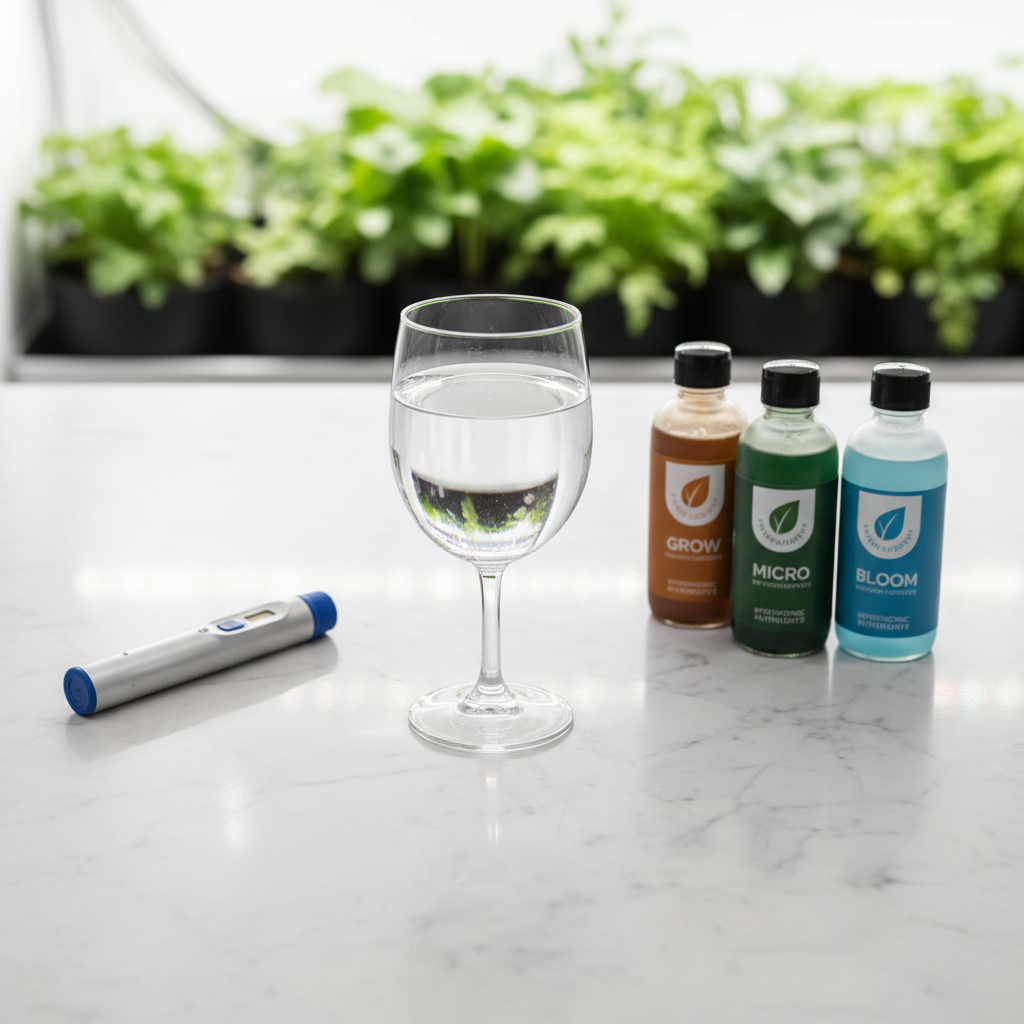
pH testing pen and hydroponic nutrients on a clean surface for indoor growing
Common Indoor Tomato Problems and Solutions
Leggy, Thin Stems
Cause: Insufficient light Fix: Move lights closer, increase to 16 hours, or upgrade to a brighter light
Flowers Dropping Without Fruit
Cause: Poor pollination or temperature stress Fix: Hand pollinate, improve air circulation, check temps
Yellow Leaves
Cause: Overwatering, nitrogen deficiency, or natural aging Fix: Check watering frequency, feed with balanced fertilizer
Blossom End Rot (Brown Bottom on Fruit)
Cause: Calcium deficiency from inconsistent watering Fix: Water on a regular schedule, add calcium supplement
Fungus Gnats
Cause: Overwatered soil Fix: Let top inch dry between watering, use yellow sticky traps
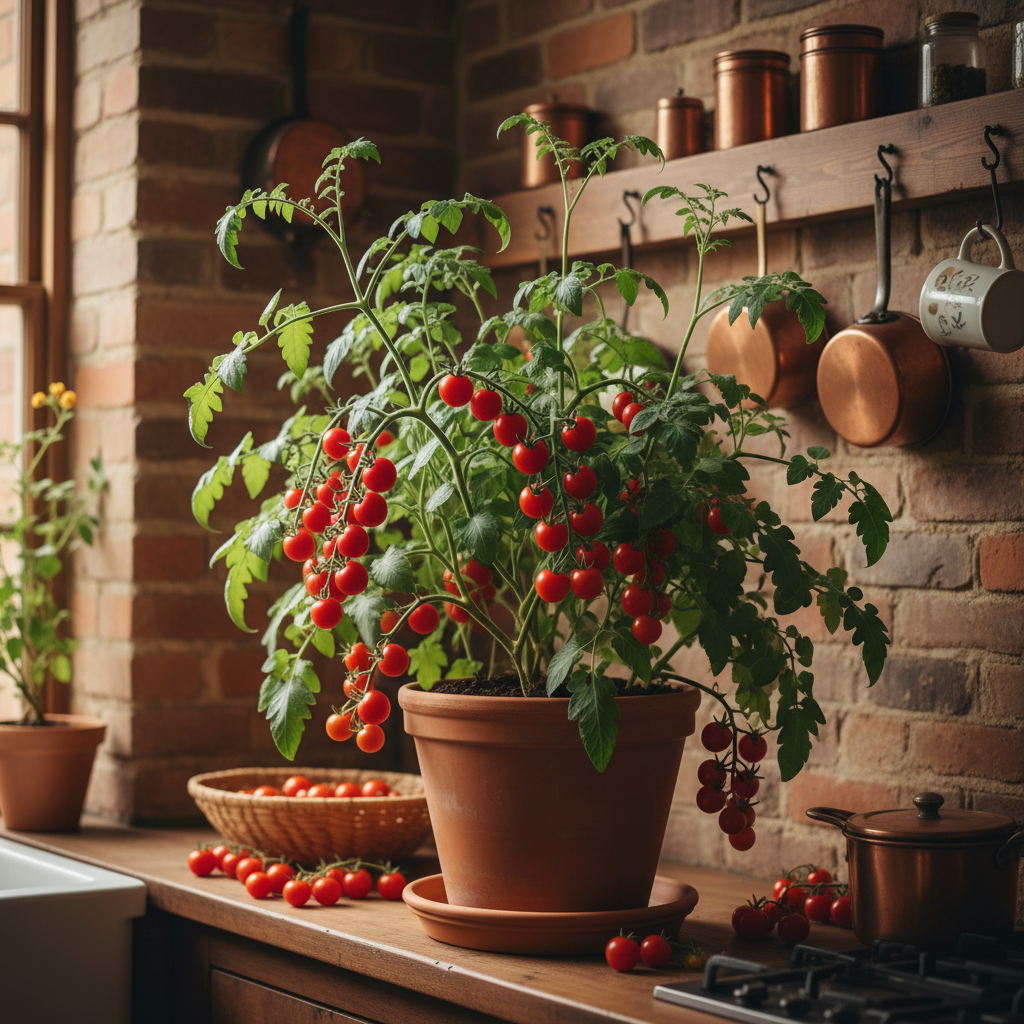
Lush indoor tomato plant loaded with ripe cherry tomatoes in a cozy kitchen
Recommended Products for Indoor Tomato Growing
After years of indoor growing, these are the products that consistently deliver results:
- LED Grow Light — Full-spectrum LED panels provide the light intensity tomatoes need for fruiting
- Self-Watering Planter — Maintains consistent moisture levels, reducing blossom end rot
- Seed Starter Kit — Complete germination setup with heat mat, dome, and cells
- Tomato Fertilizer — Balanced nutrients with extra calcium for healthy fruit production
- Clip Fan — Provides gentle air circulation for stem strength and pollination
Your Indoor Tomato Growing Timeline
| Week | Activity | |------|----------| | 1-2 | Seed germination | | 2-4 | Seedling care under lights | | 4-6 | Transplant to final container | | 6-8 | Vegetative growth, begin training | | 8-10 | Flowering begins, start pollinating | | 10-14 | Fruit development | | 12-16 | First harvest! |
Next Steps
Ready to take your indoor growing to the next level? Check out our guide on How To Grow Hydroponic Tomatoes for a completely soil-free approach, or learn more about the biology behind tomato growth.
Remember, growing tomatoes indoors is a skill that improves with practice. Your first plant might not be perfect, and that's completely okay. Each growing cycle teaches you something new.
Recommended Products
Looking for products we personally recommend? See our complete list of trusted tools and supplies to help you grow better tomatoes.
Browse Recommended ProductsFrequently Asked Questions
Written by
Sweet Tomatos Team
We're a team of passionate indoor gardeners dedicated to helping beginners grow amazing tomatoes at home. With years of hands-on experience in hydroponics and indoor growing, we share what actually works.