From Seed to Salsa: The Complete Journey of How a Tomato Grows
Discover the fascinating biological journey of a tomato plant — from tiny seed to ripe, juicy fruit. A beginner-friendly guide to understanding every growth stage.
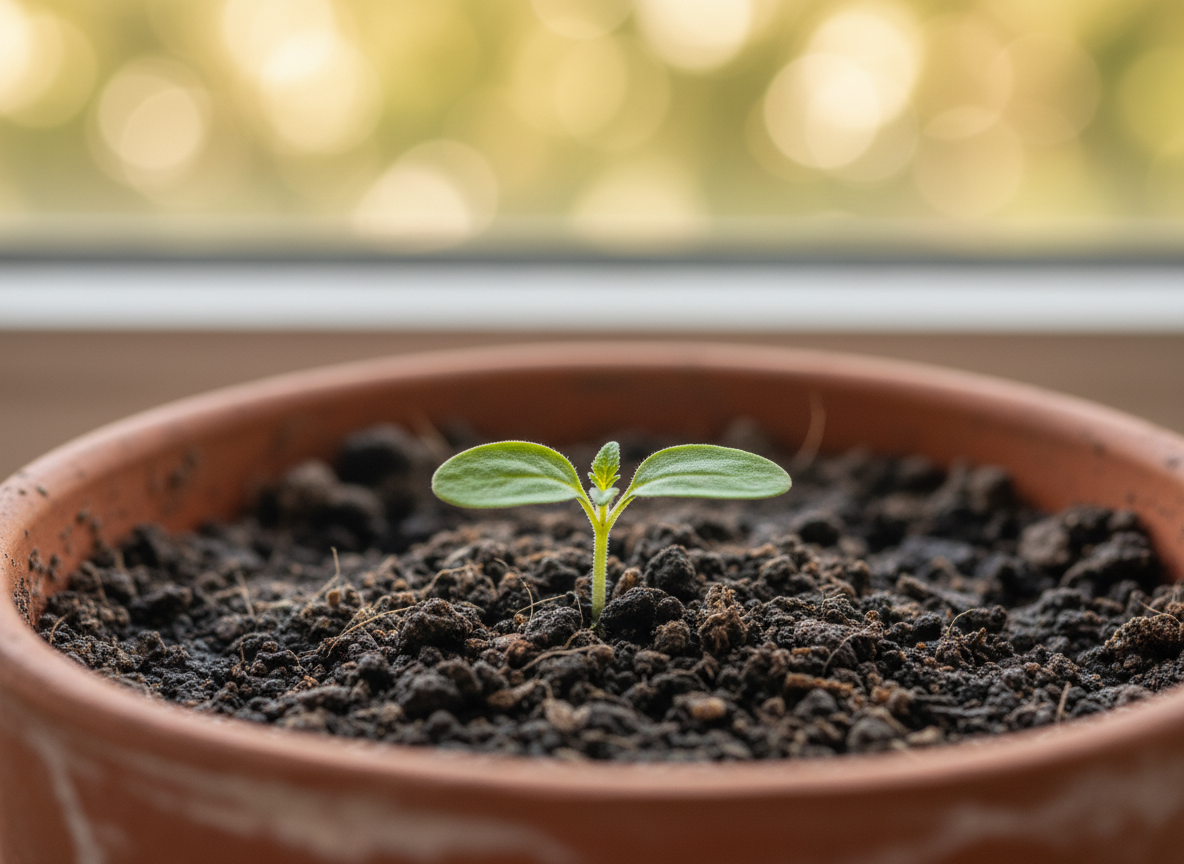
There's something magical about watching a tiny seed transform into a sprawling vine loaded with ripe, sun-warmed tomatoes. Whether you're growing on a windowsill or in a full hydroponic setup, understanding how a tomato actually grows will make you a significantly better grower.
In this guide, we'll walk through every stage of a tomato's life — from the moment you drop that seed into soil to the satisfying day you slice into your first homegrown tomato.
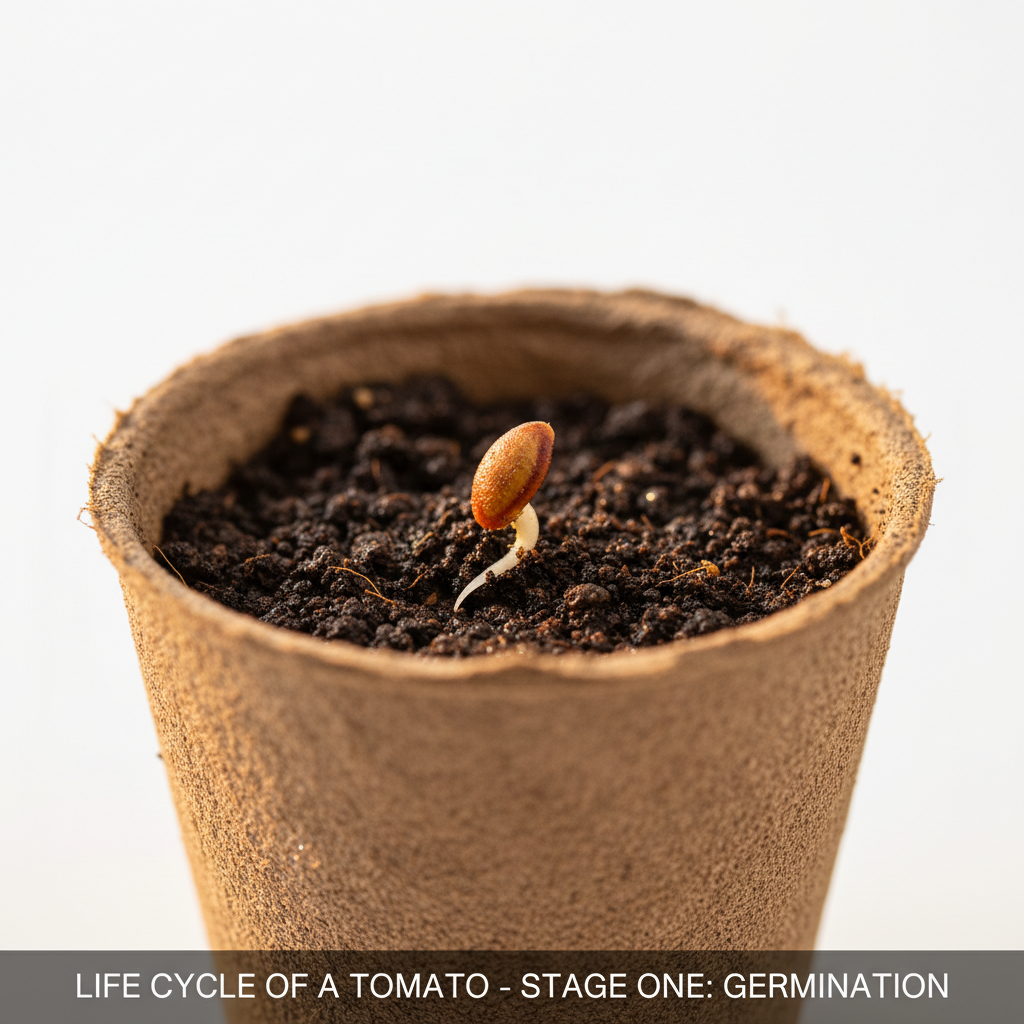
Tiny tomato seed germinating showing first root emergence
The Seed: Where It All Begins
Every tomato's journey starts as a tiny, flat seed — about 3-4mm across — packed with everything it needs to begin life. Inside that modest exterior is an embryonic plant, complete with a tiny root and shoot, surrounded by a food supply called the endosperm.
Tomato seeds have a natural dormancy period. In nature, this prevents them from germinating during unfavorable conditions. When you provide warmth (70-80°F) and moisture, you're signaling to the seed that conditions are right for growth.
Pro Tip: Soaking tomato seeds in warm water for 12-24 hours before planting can speed up germination by softening the seed coat.
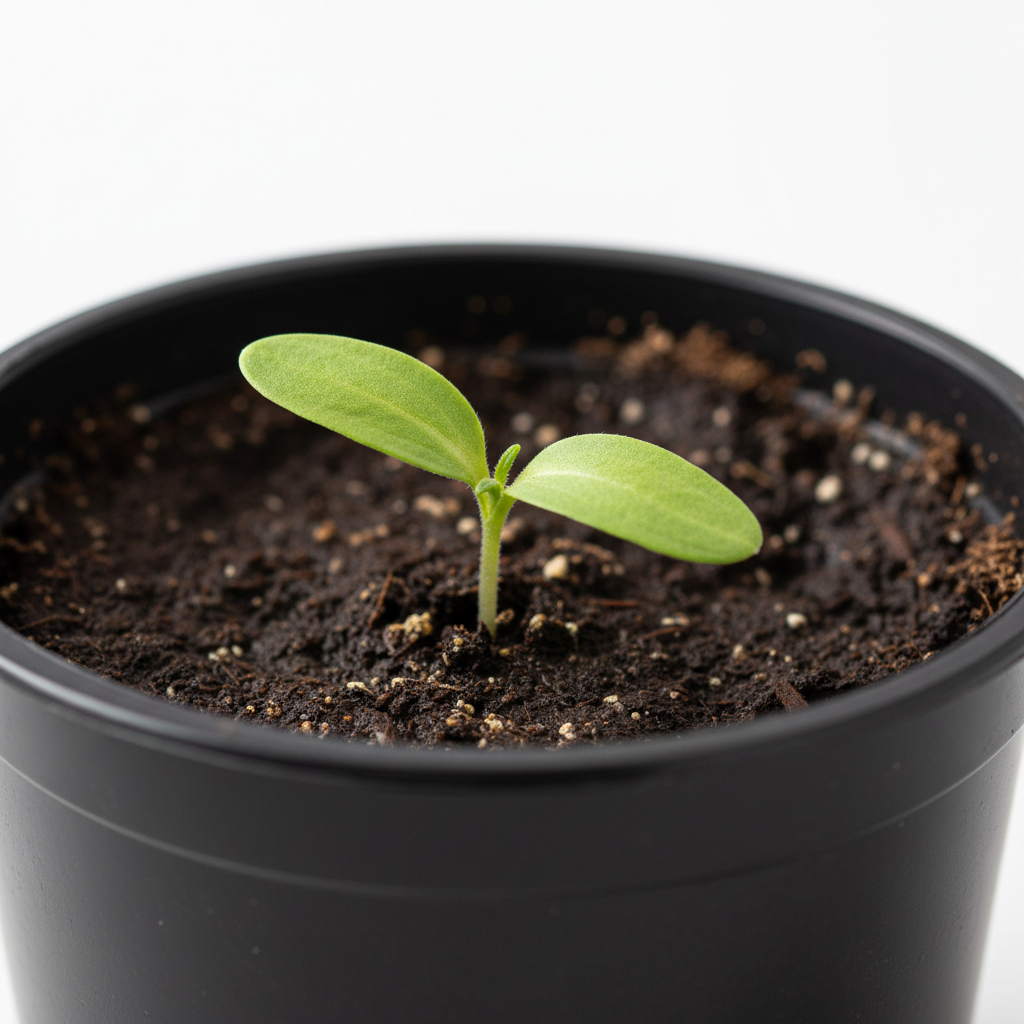
Tomato seedling with cotyledon leaves emerging from growing medium
Stage 1: Germination (Days 1-10)
Germination is the process of the seed "waking up." Here's what happens beneath the soil:
- Water absorption — The seed absorbs water, swelling to 2-3 times its original size
- Enzyme activation — Enzymes break down stored food into usable energy
- Radicle emergence — The first root (radicle) pushes through the seed coat
- Hypocotyl arch — The stem forms an arch that pushes upward through the soil
- Cotyledon emergence — The seed leaves (cotyledons) unfold above the surface
Ideal germination conditions:
- Temperature: 70-80°F (21-27°C)
- Moisture: Consistently damp, not waterlogged
- Light: Not required until emergence
- Time: 5-10 days for most varieties
A seedling heat mat is one of the best investments for consistent germination. It maintains the warm soil temperatures that tomato seeds crave.
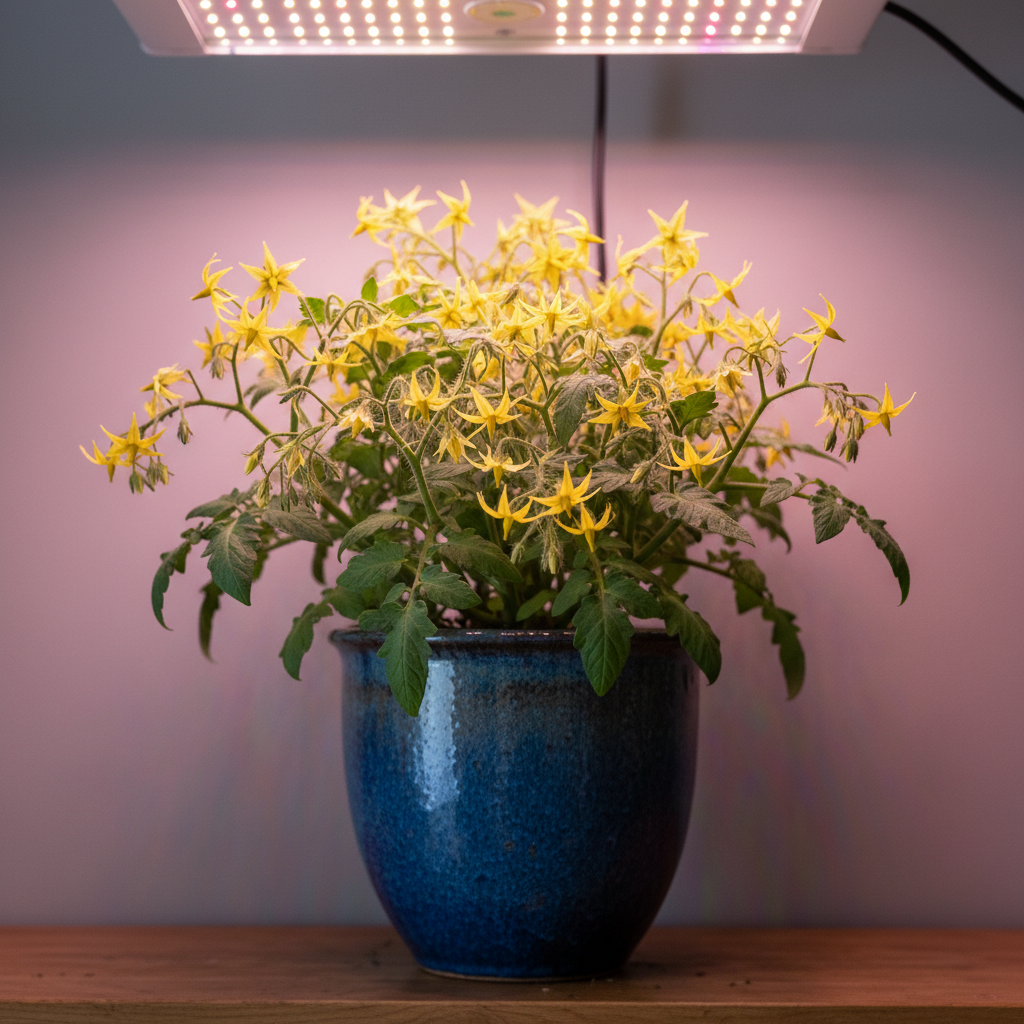
Tomato plant in full flower with yellow star-shaped blossoms
Stage 2: The Seedling Phase (Weeks 2-4)
Once your tomato breaks the surface, you'll see two small, rounded leaves — these are the cotyledons, or seed leaves. They don't look like tomato leaves at all, and that's completely normal.
Within a week, the first "true leaves" appear. These are the characteristically jagged, compound leaves you associate with tomato plants. This is when real photosynthesis kicks into high gear.
During this stage, your seedling needs:
- Bright light — 14-16 hours of strong light daily
- Gentle air movement — Strengthens stems naturally
- Proper watering — Keep soil moist but never soggy
- Cool-ish temperatures — 65-75°F to prevent leggy growth
Common Mistake: Many beginners don't provide enough light, resulting in tall, weak, "leggy" seedlings that stretch toward any available light source. A good LED grow light positioned 4-6 inches above seedlings solves this problem.
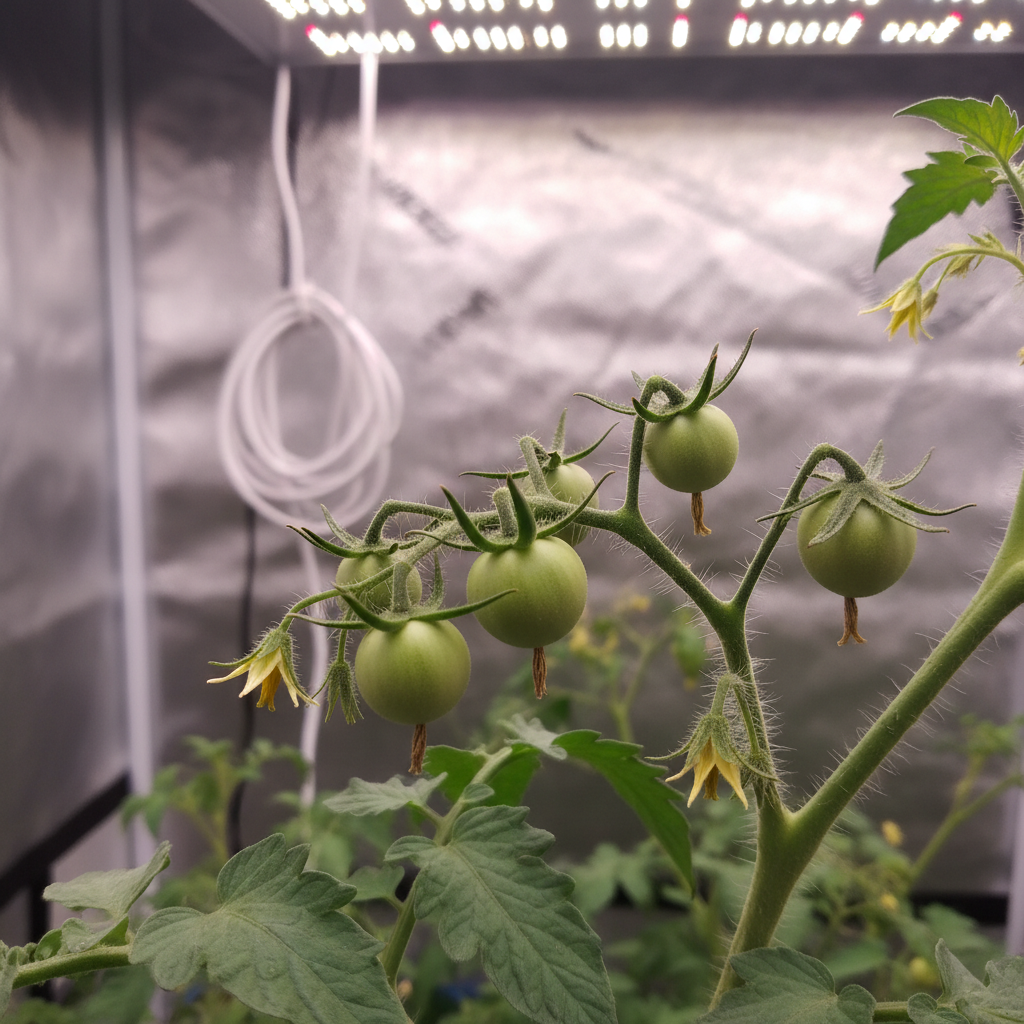
Small green tomato fruits forming on the vine after pollination
Stage 3: Vegetative Growth (Weeks 4-8)
This is when things get exciting. Your tomato plant shifts into rapid growth mode, producing new leaves, branches, and developing its root system at an impressive pace.
During vegetative growth:
- The stem thickens and becomes woody at the base
- New branches form at each leaf node
- The root system expands dramatically
- The plant may grow 1-2 inches per day under optimal conditions
This is the stage where nutrition matters most. Tomatoes are heavy feeders, and they need:
- Nitrogen — For leaf and stem growth
- Phosphorus — For root development
- Potassium — For overall plant health
- Calcium — To prevent blossom end rot later
A balanced tomato fertilizer applied according to package directions will keep your plant growing strong. We recommend starting with a diluted solution and increasing gradually.
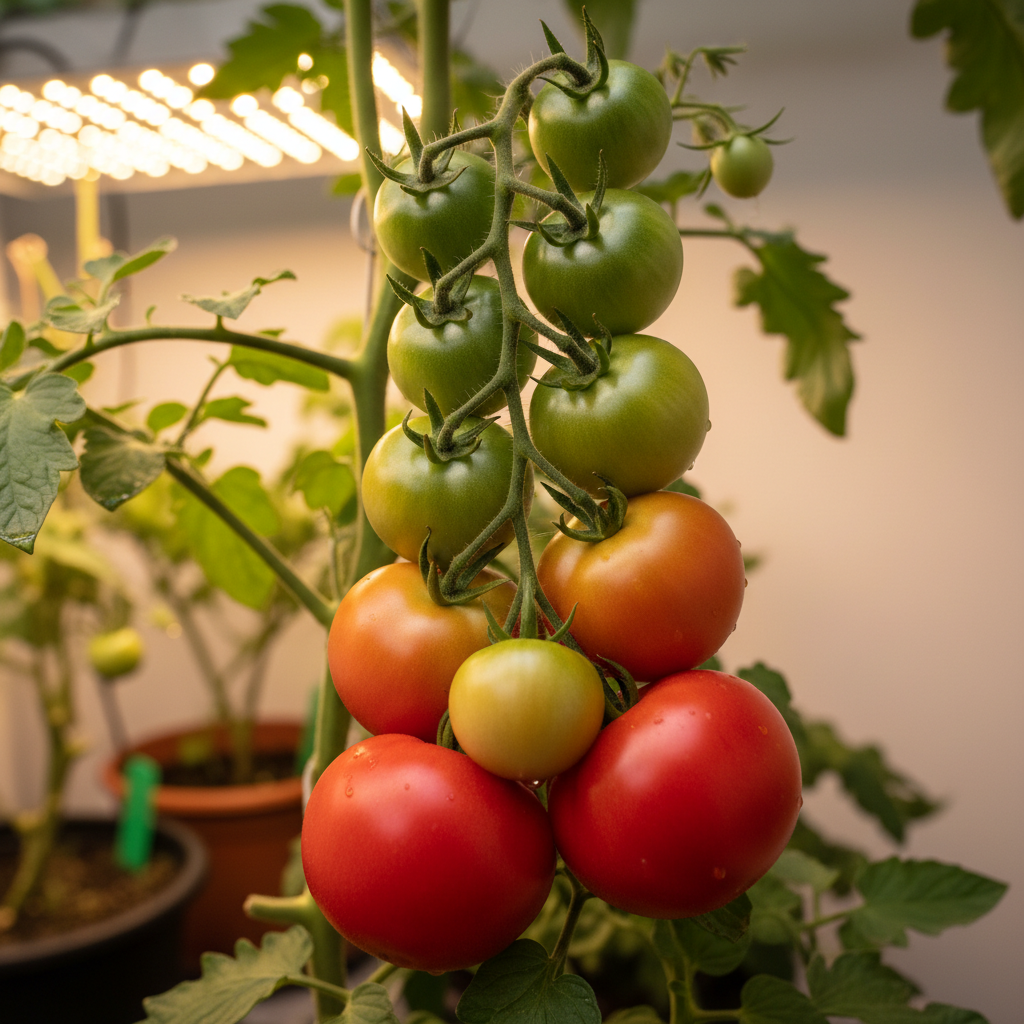
Tomato fruits ripening from green to orange to red on the vine
Stage 4: Flowering (Week 6-10)
The moment you see those tiny yellow flowers, you know fruit is on the way. Tomato flowers are "perfect" flowers — they contain both male and female parts within the same bloom, which means they can self-pollinate.
However, they still need a little help. In nature, wind and buzzing bees vibrate the flowers to release pollen. Indoors, you'll need to mimic this:
- Gently shake the plant or flower clusters
- Use an electric toothbrush to vibrate individual flower stems
- Set up a small fan for air circulation
- Hand pollinate with a small paintbrush
Temperature plays a critical role in fruit set. Pollen becomes less viable when nighttime temperatures drop below 55°F or daytime temps exceed 90°F. For indoor growers, this is actually an advantage — you control the environment.
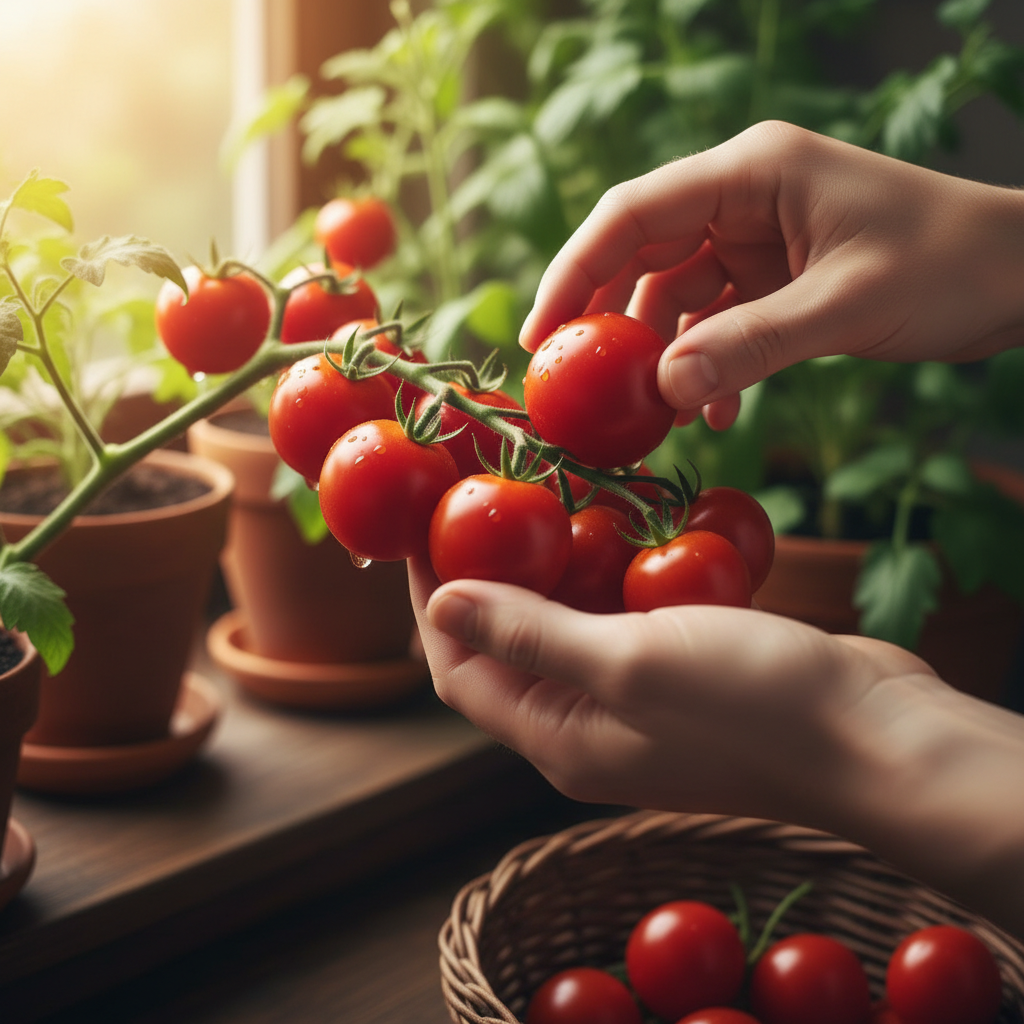
Hands harvesting perfectly ripe red cherry tomatoes from an indoor plant
Stage 5: Fruit Development (Weeks 8-14)
After successful pollination, the flower petals drop away and a tiny green tomato begins to form. Over the next 20-30 days, this small green marble will grow to full size.
During fruit development:
- The plant needs consistent watering — irregular watering causes cracking
- Potassium becomes more important than nitrogen
- Calcium needs remain high to prevent blossom end rot
- The plant redirects energy from growth to fruit production
You'll notice the green tomatoes get progressively larger, eventually reaching their full size while still completely green. A common beginner question: the fruit reaches full size BEFORE it starts to change color.
Stage 6: Ripening (Weeks 12-16+)
Ripening is a complex chemical process triggered by ethylene gas, which the tomato produces internally. As the fruit ripens:
- Chlorophyll breaks down — The green color fades
- Lycopene develops — The characteristic red pigment forms
- Sugars increase — Starches convert to sugars
- Acids balance — The sugar-to-acid ratio determines flavor
- Cell walls soften — The fruit becomes tender
Ideal ripening temperature is 68-77°F (20-25°C). Temperatures above 86°F can actually inhibit lycopene production, leading to orange or yellow patches on otherwise red tomatoes.
Pro Tip: You can pick tomatoes at the "breaker" stage (when they first show color change) and ripen them on your counter. They'll ripen just as well and reduce the risk of cracking or pest damage.
Determinate vs. Indeterminate: Two Growth Patterns
Not all tomatoes grow the same way:
Determinate varieties (bush tomatoes):
- Grow to a set height (3-4 feet)
- Produce all fruit in a concentrated period
- Stop growing after setting fruit
- Great for containers and small spaces
- Examples: Roma, Celebrity, Tiny Tim
Indeterminate varieties (vining tomatoes):
- Continue growing indefinitely
- Produce fruit continuously until frost
- Need staking, caging, or trellising
- Higher total yield over the season
- Examples: Cherry tomatoes, Beefsteak, Brandywine
For indoor growing, determinate varieties are often the better choice due to their compact size and concentrated harvest.
What Your Tomato Plant Needs at Every Stage
| Stage | Light | Water | Nutrients | Temperature | |-------|-------|-------|-----------|-------------| | Germination | Dark → bright | Moist | None | 70-80°F | | Seedling | 14-16 hrs | Moderate | Light feeding | 65-75°F | | Vegetative | 14-16 hrs | Regular | High nitrogen | 70-85°F | | Flowering | 12-14 hrs | Consistent | Balanced | 65-85°F | | Fruiting | 12-14 hrs | Even & deep | High potassium | 68-85°F | | Ripening | 10-12 hrs | Reduce slightly | Minimal | 68-77°F |
Recommended Products for Every Growth Stage
To give your tomatoes the best start, here are the essentials we recommend:
- Seed Starting Kit — A quality starter kit with cells, dome, and growing medium takes the guesswork out of germination
- Seedling Heat Mat — Maintains consistent 75°F soil temperature for faster, more reliable germination
- LED Grow Light — Full-spectrum LED lights provide the intense light tomato seedlings need without excessive heat
- Tomato Fertilizer — A balanced tomato-specific fertilizer provides the right nutrient ratios for each growth stage
Common Growth Problems and Solutions
Leggy seedlings: Not enough light. Move lights closer or increase duration.
Yellow leaves on bottom: Normal as plant matures. If widespread, check for nitrogen deficiency.
Flowers dropping without fruit: Poor pollination, temperature extremes, or stress. Improve air circulation and hand-pollinate.
Cracking fruit: Inconsistent watering. Water deeply and regularly, and mulch to retain moisture.
Blossom end rot: Calcium deficiency, usually caused by irregular watering. Maintain consistent moisture.
Your Next Steps
Now that you understand how a tomato grows, you're ready to start your own growing journey. We recommend reading our guide on How To Grow Indoor Tomatoes for a complete step-by-step walkthrough, or check out How To Grow Hydroponic Tomatoes if you're interested in soil-free growing.
Remember: every expert grower started exactly where you are now. The most important step is the first one — planting that seed.
Recommended Products
Looking for products we personally recommend? See our complete list of trusted tools and supplies to help you grow better tomatoes.
Browse Recommended ProductsFrequently Asked Questions
Written by
Sweet Tomatos Team
We're a team of passionate indoor gardeners dedicated to helping beginners grow amazing tomatoes at home. With years of hands-on experience in hydroponics and indoor growing, we share what actually works.