When Growing Tomatoes: The Complete Timing & Scheduling Guide
Timing is everything with tomatoes. Learn exactly when to plant, fertilize, prune, and harvest for the best results — whether growing indoors or outdoors.
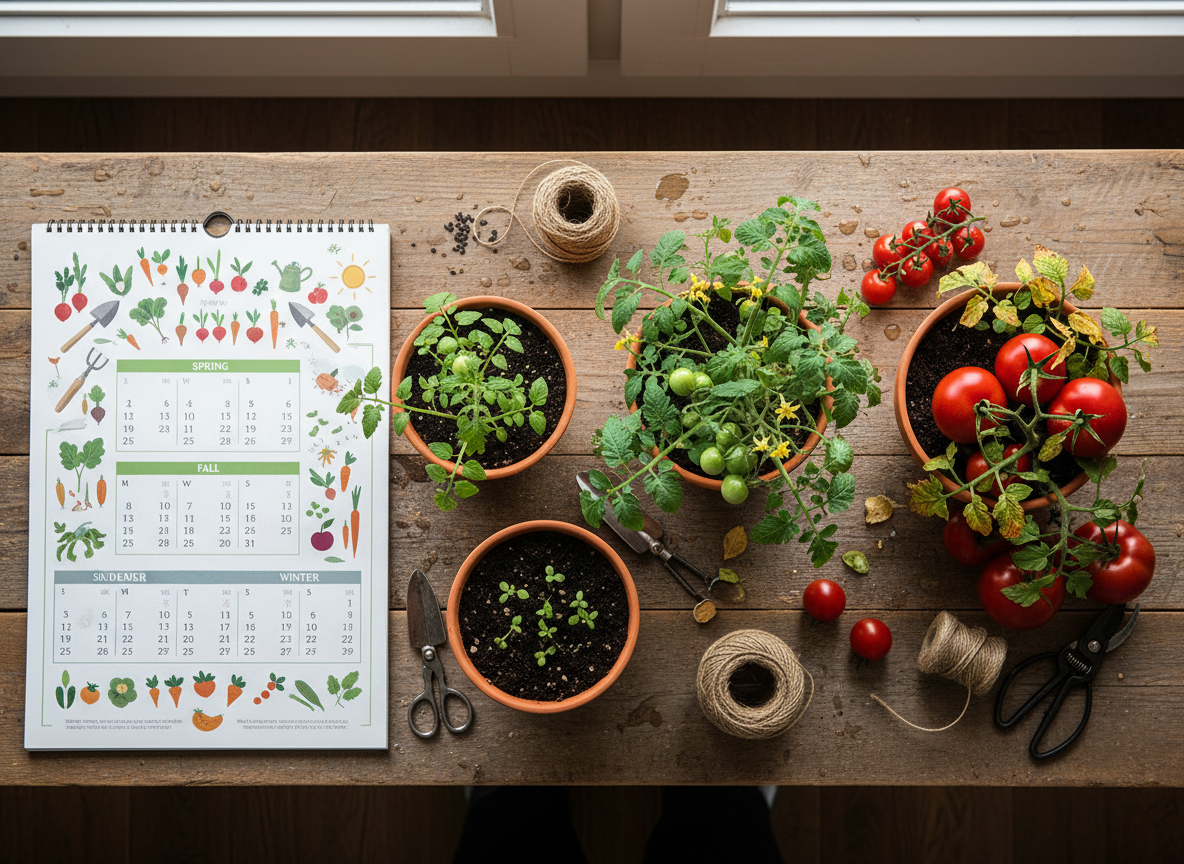
When it comes to growing tomatoes, timing isn't just important — it's everything. Plant too early, and a late frost kills your seedlings. Fertilize at the wrong time, and you get lots of leaves but no fruit. Prune too aggressively during fruiting, and you reduce your harvest.
This guide covers every timing decision you'll make as a tomato grower, whether you're growing indoors under lights or planning for an outdoor garden season.
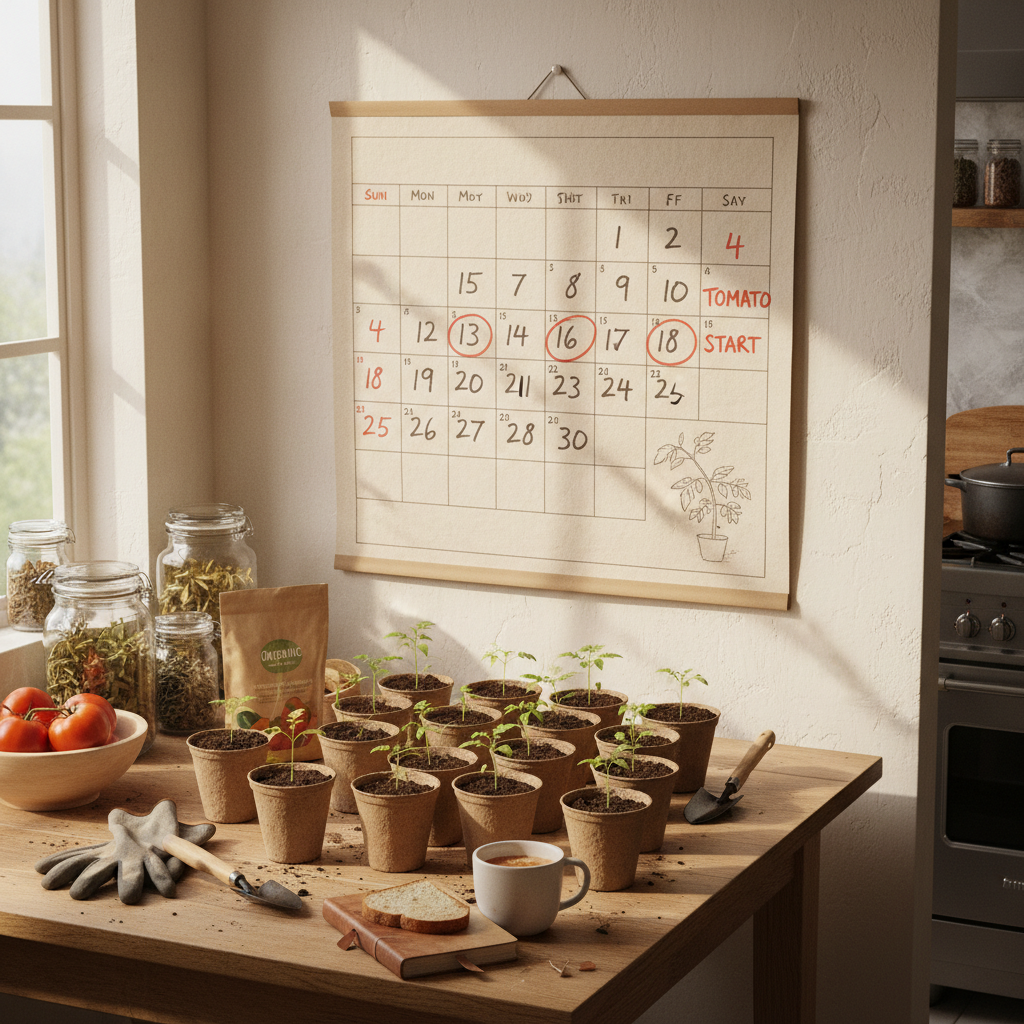
Kitchen calendar with tomato planting dates circled and seedlings on table
Understanding Tomato Growth Timing
Before we get into specific schedules, let's understand the big picture. A tomato plant's life follows a predictable timeline:
- Germination: 5-10 days
- Seedling stage: 2-4 weeks
- Vegetative growth: 3-5 weeks
- Flowering: Begins 6-8 weeks from transplant
- Fruit development: 20-30 days per fruit
- Ripening: 7-14 days from first color change
Total time from seed to first ripe tomato: 80-120 days depending on variety.
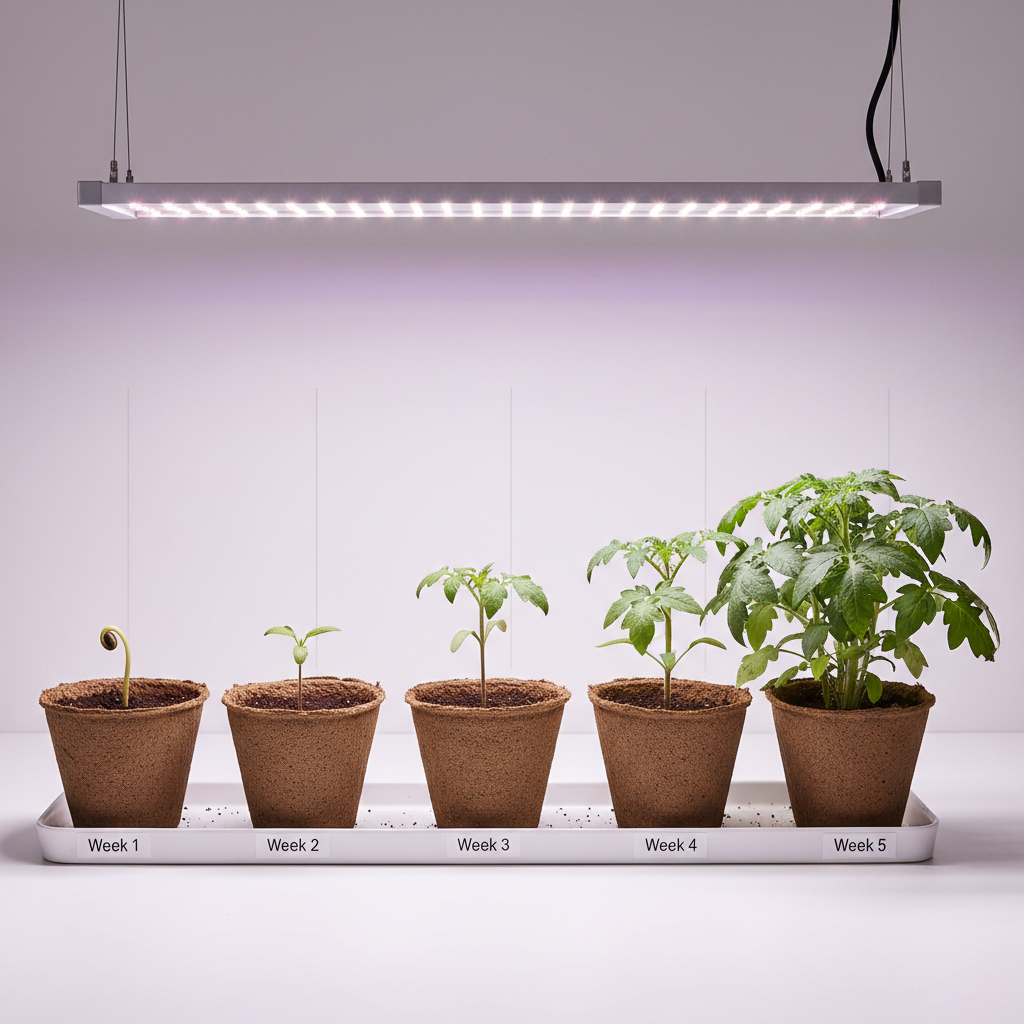
Tomato seedlings at different growth stages side by side under grow light
When to Start Seeds
For Indoor Growing (Year-Round)
The beauty of indoor growing is that timing is entirely up to you. There's no frost date to worry about, no season to plan around. That said, some practical considerations:
- Start anytime — With grow lights, every day is growing season
- Stagger plantings — Start new seeds every 4-6 weeks for continuous harvest
- Consider your schedule — Plants need daily attention; don't start seeds before a long vacation
A staggered planting schedule is one of the best strategies for indoor growers. While your first batch is fruiting, your second batch is in vegetative growth, and your third batch is just sprouting. This gives you a continuous supply.
For Outdoor Growing
Timing is critical for outdoor tomato growing:
- Start seeds indoors: 6-8 weeks before your last frost date
- Transplant outdoors: 2 weeks after your last frost date
- Soil temperature should be: At least 60°F (16°C)
- Nighttime air temps: Consistently above 50°F (10°C)
How to find your last frost date: Search online for "[your zip code] last frost date" or check with your local agricultural extension office.
Approximate Seed Starting Dates by Region (USA)
| Region | Start Seeds Indoors | Transplant Outdoors | |--------|-------------------|--------------------| | South (Zones 8-10) | January-February | March-April | | Mid-Atlantic (Zones 6-7) | March | May | | Northeast (Zones 4-5) | Late March-April | Late May-June | | Pacific Northwest (Zones 6-8) | March | May-June | | Midwest (Zones 4-6) | March-April | May-June |
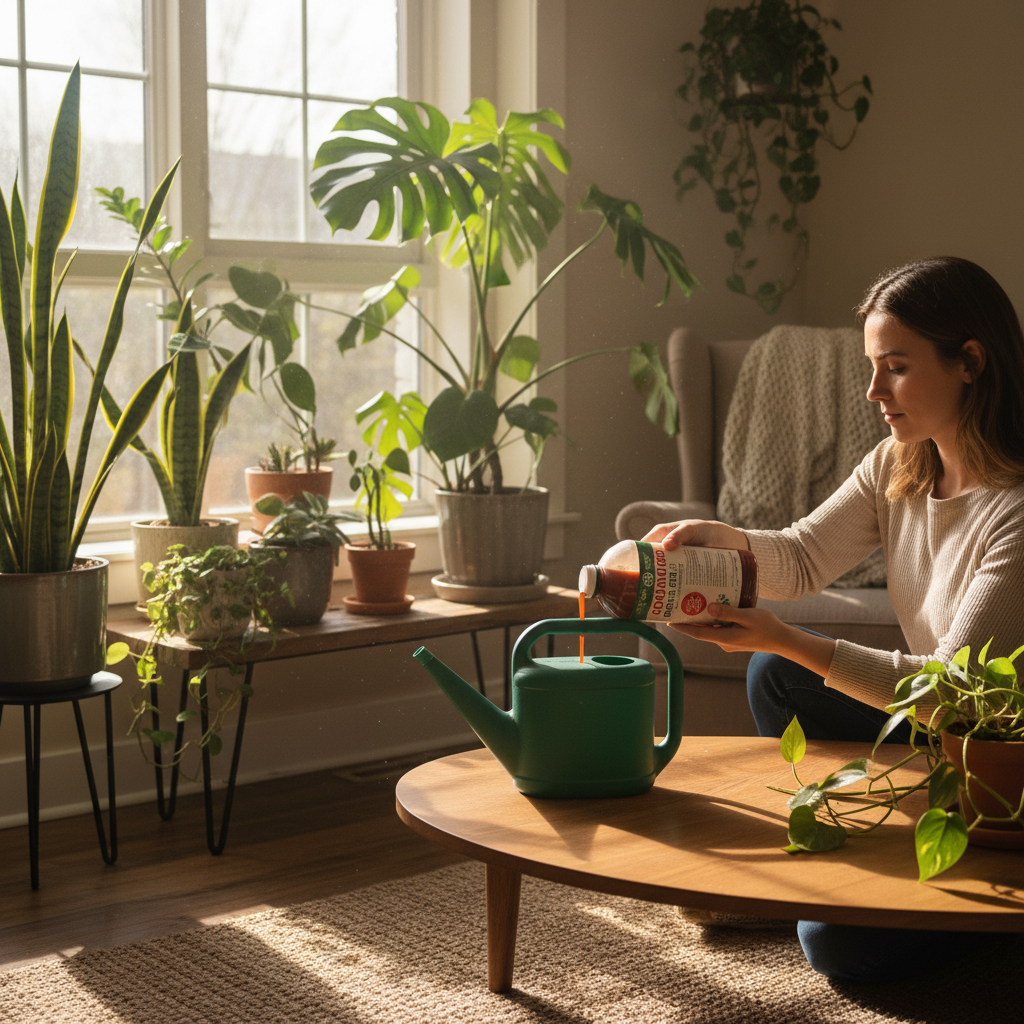
Person adding liquid tomato fertilizer to a watering can for indoor plant care
When to Water Tomatoes
Watering timing and frequency change throughout the plant's life:
Seedling Stage
- Water when surface feels dry (every 1-2 days)
- Use a spray bottle or gentle watering to avoid disturbing roots
- Never let seedlings dry out completely
- Don't overwater — soggy soil causes damping off disease
Vegetative Growth
- Water when top inch of soil is dry (every 2-3 days in containers)
- Water deeply — until water flows from drainage holes
- Morning watering is best, allowing foliage to dry during the day
- Increase frequency during hot weather or rapid growth
Flowering and Fruiting
- Consistent moisture is critical — inconsistent watering causes blossom end rot
- Water deeply and regularly, ideally at the same time daily
- Mulch helps retain moisture and regulate soil temperature
- Reduce watering slightly as fruits begin to ripen (concentrates flavor)
The Golden Rule: Deep, infrequent watering beats shallow, frequent watering. Deep watering encourages roots to grow down rather than staying near the surface.
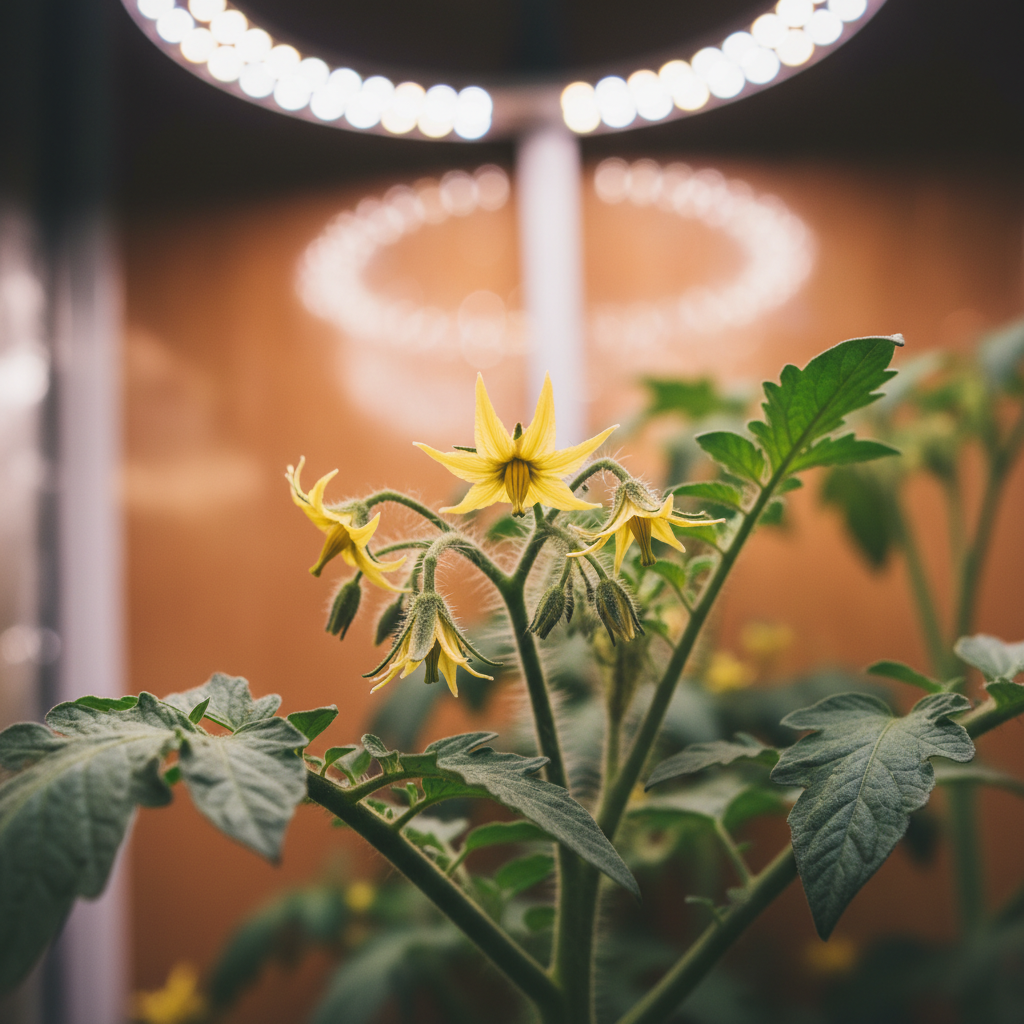
Indoor tomato plant beginning to flower under a grow light, first yellow blossoms opening
When to Fertilize Tomatoes
Tomatoes are heavy feeders, but what they need changes throughout their life cycle.
The Complete Feeding Schedule
Week 1-2 (Seedling): No fertilizer needed. Seeds contain their own food supply.
Week 3-4 (Early Seedling): Begin with 1/4 strength liquid fertilizer once a week. Look for a balanced formula (like 10-10-10).
Week 5-8 (Vegetative Growth): Increase to 1/2 strength, twice a week. Use a higher-nitrogen formula to support leaf and stem growth.
Week 8-10 (Flowering): Switch to a tomato-specific fertilizer with higher phosphorus and potassium (like 5-10-10). This supports flower and fruit development.
Week 10+ (Fruiting): Continue with the tomato fertilizer every 1-2 weeks. Add calcium supplement if you notice blossom end rot.
Late Season/End of Life: Reduce feeding to allow the plant to direct energy to ripening existing fruit.
Signs You're Over-Fertilizing
- Dark green, lush foliage but no flowers
- Leaf tip burn (brown, crispy edges)
- White crust on soil surface
- Lots of vegetative growth, few flowers
Signs You're Under-Fertilizing
- Pale, yellowing leaves (especially lower leaves)
- Slow growth
- Small fruit
- Purple stems (phosphorus deficiency)
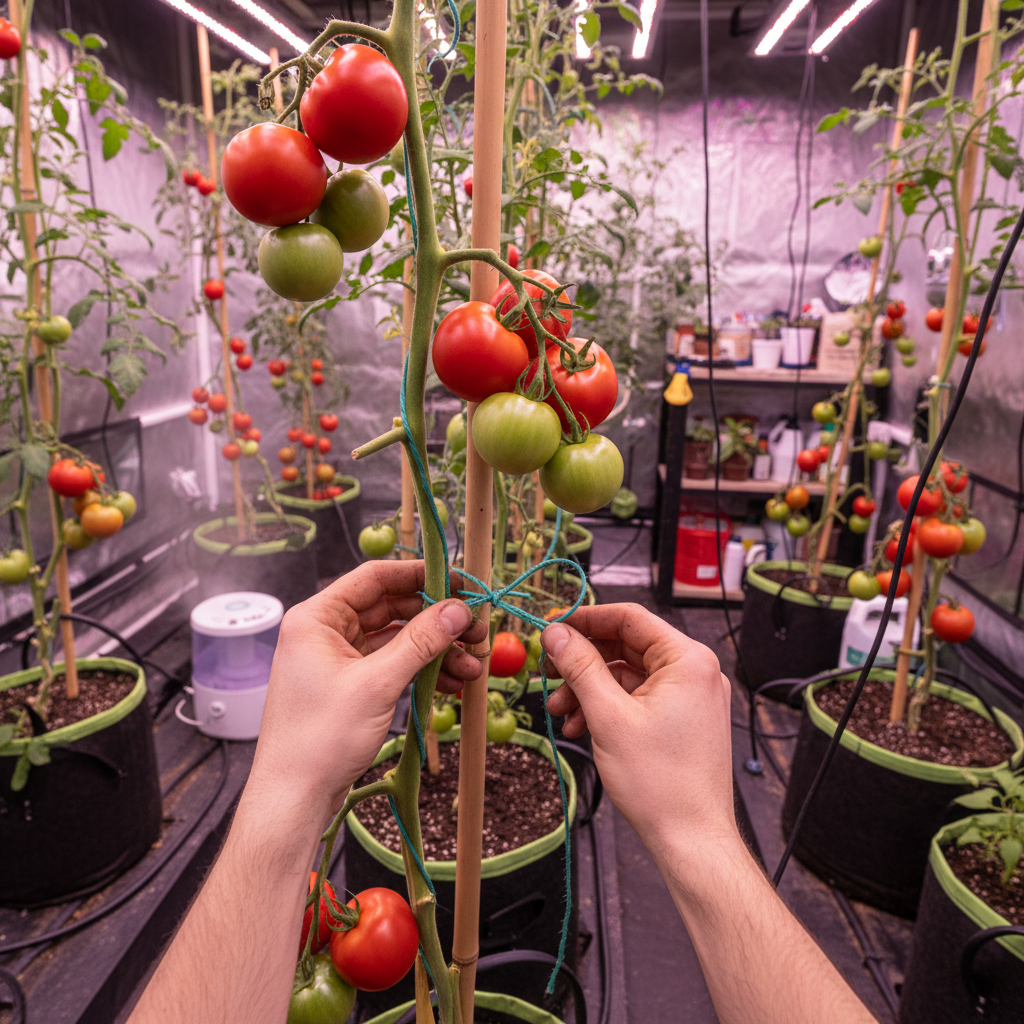
Gardener training indoor tomato plant by tying stems to a bamboo stake
When to Prune Tomatoes
Pruning timing depends on your variety type:
Determinate Varieties (Bush)
- Minimal pruning needed — These plants are genetically programmed to stay compact
- Remove dead or yellowing lower leaves
- Don't remove suckers — they produce fruit on determinate plants
- Best for indoor growing due to compact habit
Indeterminate Varieties (Vine)
- Start pruning suckers when the plant has 4-5 main branches
- Remove suckers below the first flower cluster
- Keep 3-4 main stems for indoor growing
- Remove suckers when they're small (less than 2 inches)
- Continue removing new suckers weekly
When NOT to Prune
- During extreme heat or stress
- After transplanting (wait 1-2 weeks)
- During heavy fruiting (focus energy on ripening)
- Late in the season (existing leaves protect developing fruit)
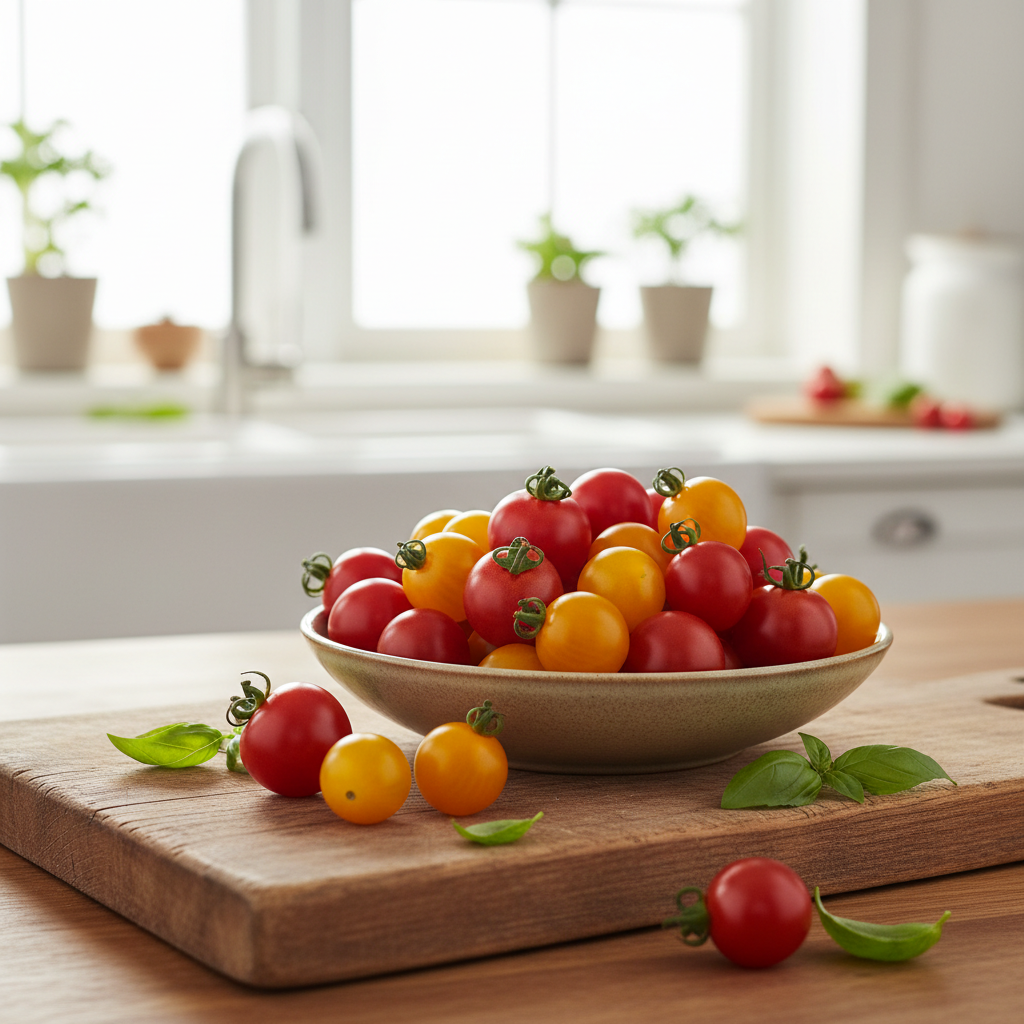
Bowl of freshly harvested homegrown red orange and yellow cherry tomatoes on cutting board
When to Pollinate Indoor Tomatoes
Timing your pollination efforts matters:
- Best time of day: Late morning to early afternoon
- Why: Pollen is most viable when it's warm and dry
- Frequency: Every 1-2 days when flowers are open
- Duration: Flowers are receptive for about 2-3 days
- Method: Gentle shaking, electric toothbrush, or small fan
Flowers that aren't pollinated within their receptive window will drop off. Don't worry if some flowers drop — it's normal for plants to shed some flowers, especially the first few.
When to Harvest Tomatoes
Harvesting at the right time maximizes flavor:
Signs of Ripeness
- Full color development (varies by variety)
- Slight softness when gently squeezed
- Easy to twist off the vine
- Characteristic tomato aroma at the stem end
- Glossy skin with no green shoulders
Harvest Timing Tips
- Morning harvest produces the juiciest tomatoes (plants rehydrate overnight)
- Pick regularly to encourage the plant to produce more
- Don't wait too long — overripe tomatoes crack and attract pests
- Breaker stage picking is fine — tomatoes ripen well on the counter
Extending Your Harvest
- For indoor plants: stagger your planting dates
- Remove late-season flowers so the plant focuses on existing fruit
- Reduce watering slightly during final ripening
- At end of plant life, pick remaining green tomatoes — they'll ripen indoors
Monthly Maintenance Calendar for Indoor Growers
Since indoor growing is year-round, here's a rolling monthly maintenance checklist:
Weekly Tasks:
- Check soil moisture daily
- Fertilize 1-2 times per week (based on growth stage)
- Pollinate open flowers
- Check for pests (under leaves)
- Remove dead or yellowing leaves
Bi-Weekly Tasks:
- Prune suckers on indeterminate varieties
- Rotate plants for even growth
- Clean light fixtures (dust reduces light output)
- Check pH of water/nutrient solution
Monthly Tasks:
- Deep clean growing area
- Inspect for root-bound plants
- Start new seedlings (for staggered harvest)
- Replace or replenish potting mix in long-term containers
Recommended Products for Every Stage
- Seed Starter Kit — For reliable germination every time
- Full-Spectrum LED Grow Light — The single most important investment for indoor growing
- Tomato Fertilizer Set — Includes vegetative and fruiting formulas for complete nutrition
- Self-Watering Planters — Consistent moisture for the best fruit quality
Key Timing Mistakes to Avoid
- Starting too many plants at once — Start small, 2-3 plants, then scale up
- Transplanting too early (outdoor) — Wait until after last frost
- Over-fertilizing young seedlings — They need very little at first
- Ignoring pollination window — Pollinate daily when flowers are open
- Waiting too long to harvest — Pick at peak ripeness for best flavor
What to Read Next
Now that you understand the timing of tomato growing, put this knowledge into practice:
- New to indoor growing? Start with How To Grow Indoor Tomatoes
- Want to understand the science? Read How a Tomato Grows
- Ready for advanced techniques? Try How To Grow Hydroponic Tomatoes
Recommended Products
Looking for products we personally recommend? See our complete list of trusted tools and supplies to help you grow better tomatoes.
Browse Recommended ProductsFrequently Asked Questions
Written by
Sweet Tomatos Team
We're a team of passionate indoor gardeners dedicated to helping beginners grow amazing tomatoes at home. With years of hands-on experience in hydroponics and indoor growing, we share what actually works.